English
 русский
 Français
 Español
 عربى
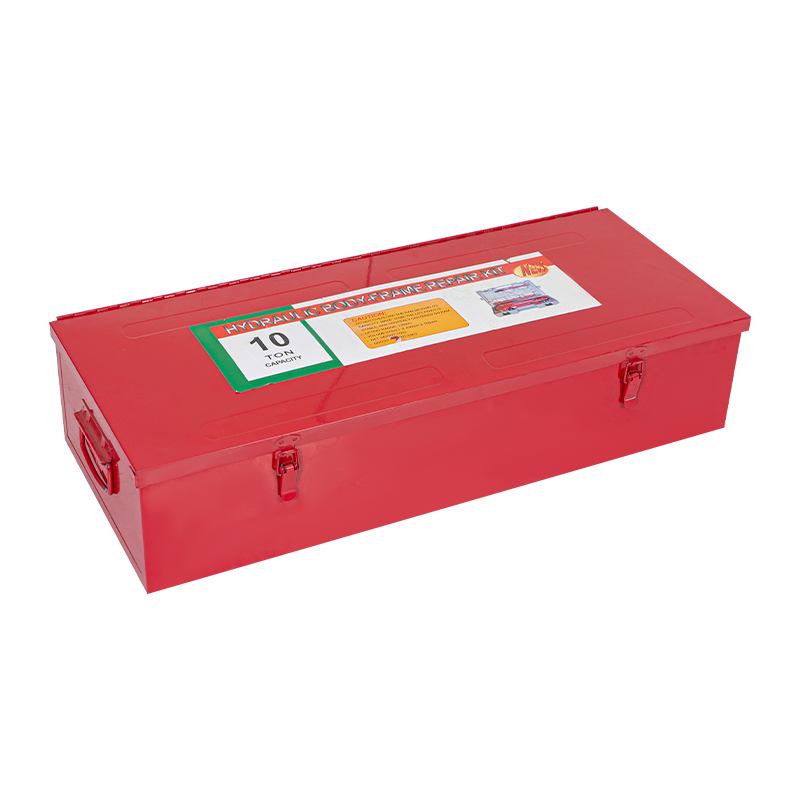
OY3110 10Ton overload-protected Hydraulic Porta Power Jack
The OY3110 10-Ton Overload-Protected Hydraulic Porta Power Jack is a versatile, portable hydraulic rescue...



Home · News · Industry News · Porta Power Jack Guide: Sizes, Uses and Safe Operation
Content
A Porta Power jack is a portable hydraulic ram kit made of a hand pump, a flexible hose and a cylinder, with a set of extension tubes and heads. It is built to straighten bent metal, push out dents, spread panels and press stuck parts apart. It is not built to lift a car so you can work under it. For most garages and small body shops, a 10-ton kit with four extension tubes and an overload-protected pump covers the widest range of jobs at a sensible price.
The kit works on the same principle as a bottle jack, but it separates the pump from the ram. That lets you place the cylinder in a tight spot, such as between a frame rail and a floor jack, while you pump from a comfortable position. Entry-level kits usually cost between roughly $100 and $165 for 6 to 12 tons, while snap-lock versions with more accessories can go past $250.
Buyers often confuse the two because both use hydraulic fluid. The difference is how the force is applied and how the load is held. A floor jack raises a vehicle vertically and is designed to be paired with jack stands. A Porta Power ram applies force in any direction you can brace it, but it is not a support device.
| Feature | Porta Power Jack | Floor Jack |
|---|---|---|
| Main purpose | Pushing, pulling, spreading, pressing | Raising a vehicle |
| Pump and ram | Separate, joined by a hose | Built into one body |
| Working direction | Any direction with proper bracing | Vertical only |
| Typical stroke | About 4 to 6 inches, extendable with tubes | Lifts to a set height range |
| Safe to work under? | No | No, use jack stands |
Kits are commonly sold in capacities from 4 to 20 tons. One ton of rated capacity equals 2,000 pounds of force, so a 10-ton ram is rated for 20,000 pounds and a 12-ton ram for 24,000 pounds. More capacity is not always better. A larger ram is heavier, slower to pump and harder to fit into small gaps.
| Capacity | Rated Force | Best For |
|---|---|---|
| 4 ton | 8,000 lb | Door frames, fenders, light panel work |
| 10 ton | 20,000 lb | Car and light truck body and frame repair, general shop use |
| 12 ton | 24,000 lb | Pickup frames, farm equipment, extra margin |
| 20 ton | 40,000 lb | Heavy equipment, press-fit work, industrial maintenance |
If you mostly repair passenger cars, a 4-ton kit is enough for light work, but a 10-ton kit gives you room to grow without a large jump in size or cost. Going to 20 tons only makes sense if you regularly work on heavy equipment.
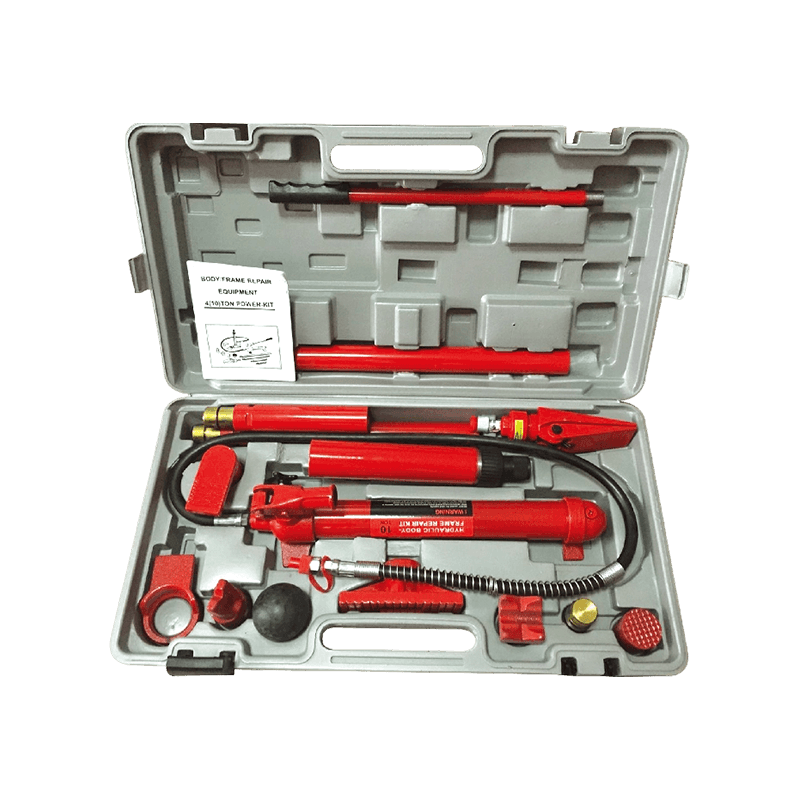
Two kits with the same tonnage can differ a lot in usefulness. A typical 12-ton kit weighs about 54 pounds, includes a hose around 4.6 feet long, and offers a stroke of roughly 5.2 inches. Check the contents list before buying.
Snap-lock tubes assemble faster than threaded tubes, which matters when you change setups many times during one repair.
The setup below applies to most body and frame jobs. Always follow the instructions that came with your kit, because coupler styles and pump release valves differ.
Brace the base against a solid structure on the opposite side, then use a rubber head against the panel. Small, repeated pumps work better than one large push because they let you stop as soon as the panel reaches shape.
Use the ram with a chain or spreader toe for a pull, or the V-shaped head for a push against a round rail. For a 10-ton kit, plan to anchor the opposite end firmly, since the force you generate travels through the whole structure.
The spreader toe opens narrow gaps such as a collapsed door pillar. For pressing bushings or bearings, a flat base and a plunger toe keep force aligned. Misalignment is the usual cause of bent tubes and damaged parts.
The same kit can free seized pins, align loader arms and open bent implements. A 12-ton rating gives a margin on heavier steel without moving up to a bulky 20-ton unit.
Hydraulic rams store a great deal of force, and a slipping tube stack can launch metal across a shop. Never place any part of your body under or in line with a loaded ram. Follow these rules on every job.
Most problems come from low fluid, trapped air or a dirty coupler. Check the oil level with the ram fully retracted, use only the hydraulic oil your manual specifies, and wipe the couplers before connecting them.
| Symptom | Likely Cause | First Fix |
|---|---|---|
| Ram does not extend | Release valve open or low oil | Close the valve and top up the fluid |
| Spongy or jerky movement | Air in the system | Bleed air by following the manual's procedure |
| Ram holds then slowly sinks | Worn seal or leaking valve | Replace the seal kit or pump |
| Fluid at the coupler | Loose or damaged fitting | Tighten, clean or replace the coupler |
Store the ram retracted, coat bare steel lightly with oil and keep the kit in its case to protect threads and seals.
Price alone is a poor guide, since a $137 10-ton kit and a $255 snap-lock kit may both do the job, but they differ in tube design and accessory range. Compare the points below to decide which one fits your work.
A well-chosen kit pays for itself on the first few repairs, and it keeps working for years if you respect its limits and keep the fluid clean.