


 English
 русский
 Français
 Español
 عربى






 2026-10-30
 Industry News

Zhejiang Vermillion Import and Export Co., Ltd. manufactures mechanical scissor jacks for emergency tire changes, roadside assistance kits and light vehicle maintenance. Our range covers 1 ton, 1.5 ton and 2 ton models with hand-crank operation, high-strength steel frames and corrosion-resistant finishes, supplied to wholesalers, distributors, brand sellers and workshop equipment projects worldwide.
Mechanical Lifting, Built Around the Vehicle Interface
As a Scissor Jack manufacturer, we match product configuration to the application, operating limits, interfaces and acceptance criteria defined for each project.
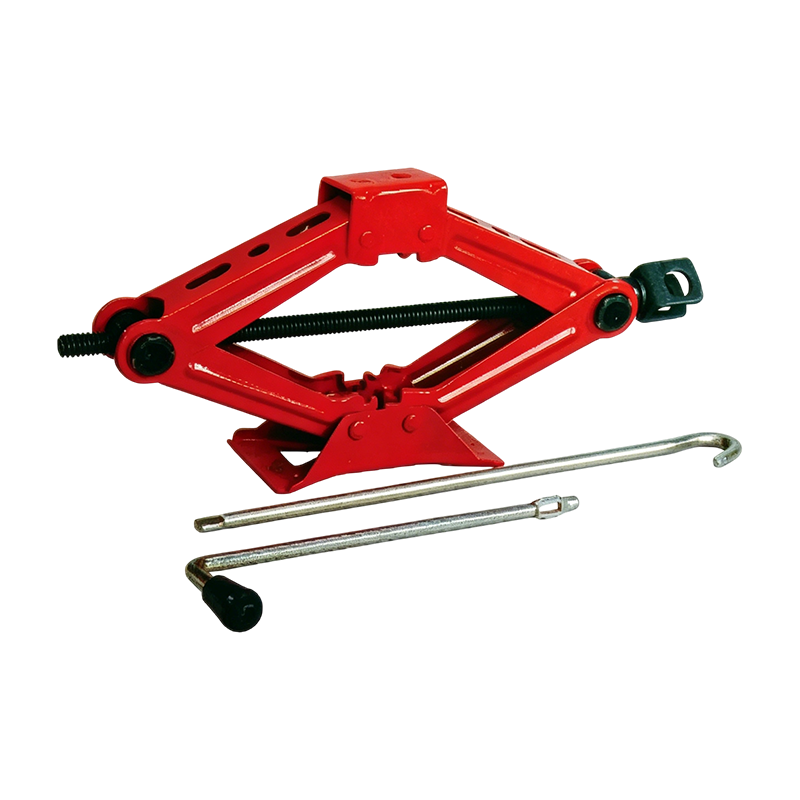
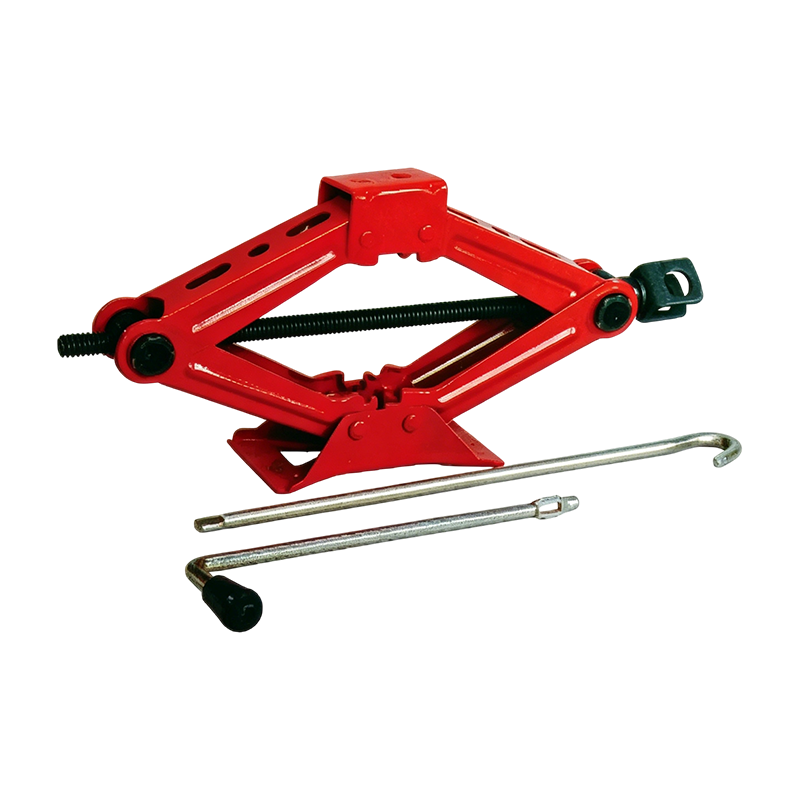
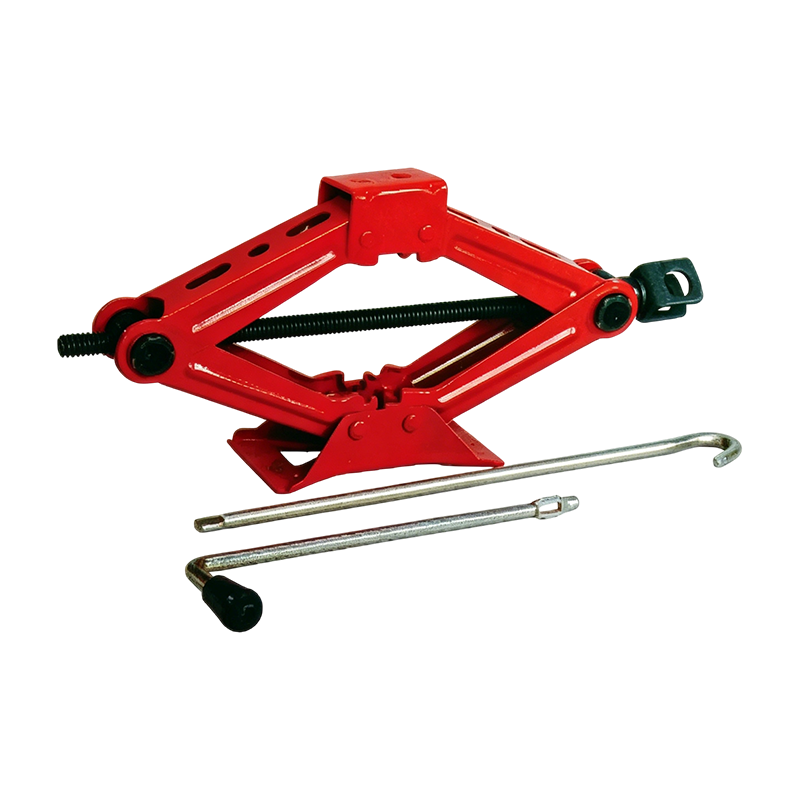
A scissor jack raises a vehicle through a crisscross folding linkage driven by a threaded rod and crank handle. Because the load path is purely mechanical, the jack needs no hydraulic fluid, air supply or power source, which makes it the default lifting tool for trunk-mounted emergency kits and light service bays.
We build the lifting frame from high-strength steel, then apply a corrosion-resistant coating to the base plate, arms and threaded spindle. The wide base plate spreads load across the ground surface, and the saddle is shaped to engage standard vehicle lift points without slipping during the lift stroke.
Our Scissor Jack Range
Three standard models cover the majority of passenger-car and light-commercial applications. Each one is available as a standard build or as a customized configuration under our OEM/ODM program.
| Model | Capacity | Operation | Typical Fit |
|---|---|---|---|
| OY0021-A | 1 ton | Hand-operated crank | Compact cars, city vehicles, emergency kits |
| OY0021-B | 1.5 ton | Low-effort crank | Sedans, SUVs, roadside assistance programs |
| OY0021-C | 2 ton | Crank with handle | Larger passenger cars, light vans, service fleets |
Capacity ratings refer to the vertical load the jack is designed to raise. Where a vehicle sits close to a capacity boundary, we recommend stepping up one model so the jack works comfortably inside its rated range rather than at its limit.
Where Each Jack Type Fits
Scissor jacks are one part of a broader lifting and support family we manufacture. Matching the jack type to the task keeps the tool within its design intent.
- Scissor jack: mechanical, compact, stored flat in a trunk; best for emergency tire changes and light maintenance on passenger vehicles.
- Floor Jack: hydraulic, rolling, fast lift for workshop bays and repeated lifting cycles.
- Bottle Jack: hydraulic vertical lift for higher-capacity static lifting points.
- Air Jack: pneumatic lifting where compressed air is available and speed matters.
- Farm Jack: high-lift lever jack for off-road, agricultural and recovery use.
For projects that combine lifting with vehicle repositioning or engine work, our wider Jack program and the Products index show how these tools are grouped for kit building.
Materials and Critical Specifications
Buyers who resell scissor jacks under their own brand usually care about a small set of parameters. These are the values we confirm before a quotation is issued.
- Rated capacity: 1 t, 1.5 t or 2 t, matched to vehicle curb weight and lift point load.
- Lift range: minimum collapsed height and maximum raised height, checked against the vehicle's jacking point clearance.
- Frame material: high-strength steel arms and base plate with a corrosion-resistant coating.
- Spindle: threaded rod sized to the rated load, with a crank handle interface that resists slipping under torque.
- Base plate: wide footprint for stability on asphalt, concrete and packed gravel.
- Finish: coating system selected for the target market's climate and storage conditions.
Configuration and OEM/ODM Options
Our OEM/ODM program covers the changes that matter most to brand owners and distributors entering a new market.
- Logo and packaging: laser marking of the customer brand on the tool, plus customized color box, carton and multi-language user manual.
- Structure and parameter adjustment: our R&D team adjusts dimensions, appearance and operating structure to suit regional standards and usage habits.
- Exclusive development: prototype design, sample production, mass production and testing for proprietary models.
- Kit integration: scissor jacks can be supplied alongside related lifting and support tools for a complete roadside or workshop kit.
Quality Control and Acceptance
Our factory operates under an ISO9001 quality management system, and core products carry CE certification. Production runs through 100% full inspection so that defective units are held back before packing.
For scissor jacks specifically, inspection focuses on the load-bearing frame, the threaded spindle, the crank engagement and the coating coverage. Where a project requires documented acceptance, we agree the inspection points and test sequence with the customer before the order is released to production.
Installation, Use and Maintenance
A scissor jack needs no installation, no hydraulic bleeding and no compressed air connection. Correct use depends on placing the saddle under the vehicle's designated lift point, keeping the base plate flat on firm ground and raising the load smoothly with the crank.
- Inspect the spindle thread and arm pivots before each use; replace the jack if the frame is bent or the thread is damaged.
- Keep the threaded rod lightly lubricated and free of grit to maintain smooth crank effort.
- Store the jack flat in its designated compartment so the frame is not deformed by other cargo.
- Never work under a vehicle supported only by a jack; use a jack stand or other rated support.
We supply operation video tutorials and long-term technical guidance, and we maintain low-cost spare parts supply so distributors can support their own after-sales channels.
Information We Use to Configure Your Solution
To prepare an accurate configuration and quotation, we work from the following project inputs. The more precisely these are defined, the faster we can confirm a build.
| Input | Why We Need It |
|---|---|
| Target vehicle class and weight | Sets the rated capacity and lift range |
| Required lift height and collapsed height | Confirms the jack fits the vehicle jacking point and storage space |
| Branding and packaging requirements | Drives logo marking, color box, carton and manual language |
| Destination market and applicable standards | Determines coating, labeling and certification requirements |
| Order quantity and trial order plan | Sets MOQ, pricing tier and production scheduling |
| Delivery port and shipping preference | Confirms logistics routing from our Jiaxing base near Shanghai and Ningbo ports |
Frequently Asked Questions
What capacities do your scissor jacks cover?
Our standard range covers 1 ton, 1.5 ton and 2 ton models. Capacity is matched to the vehicle class and the load carried at the jacking point, and we recommend stepping up a model when the vehicle sits near a capacity boundary.
Can we order scissor jacks with our own brand and packaging?
Yes. We provide OEM/ODM service including laser marking of your logo on the tool, customized color boxes and cartons, and user manuals in multiple languages such as English, Japanese, Spanish and French.
What certifications apply to your scissor jacks?
Our factory operates under ISO9001 quality management system certification, and core products hold CE certification. Certification scope is confirmed per model during the quotation stage.
What is the minimum order quantity?
MOQ is flexible for standard models. We accept small trial orders for market testing, and unit pricing becomes more favorable for bulk full-container orders.
Do you supply spare parts and after-sales support?
We provide long-term after-sales technical guidance, operation video tutorials and low-cost spare parts supply so distributors can maintain their own service channels.
How quickly can you respond to a technical enquiry?
Our multilingual sales and engineering team provides one-on-one technical consultation, parameter matching and quotation support, typically within 24 hours of receiving a complete project brief.
