


 English
 русский
 Français
 Español
 عربى






 2026-10-30
 Industry News

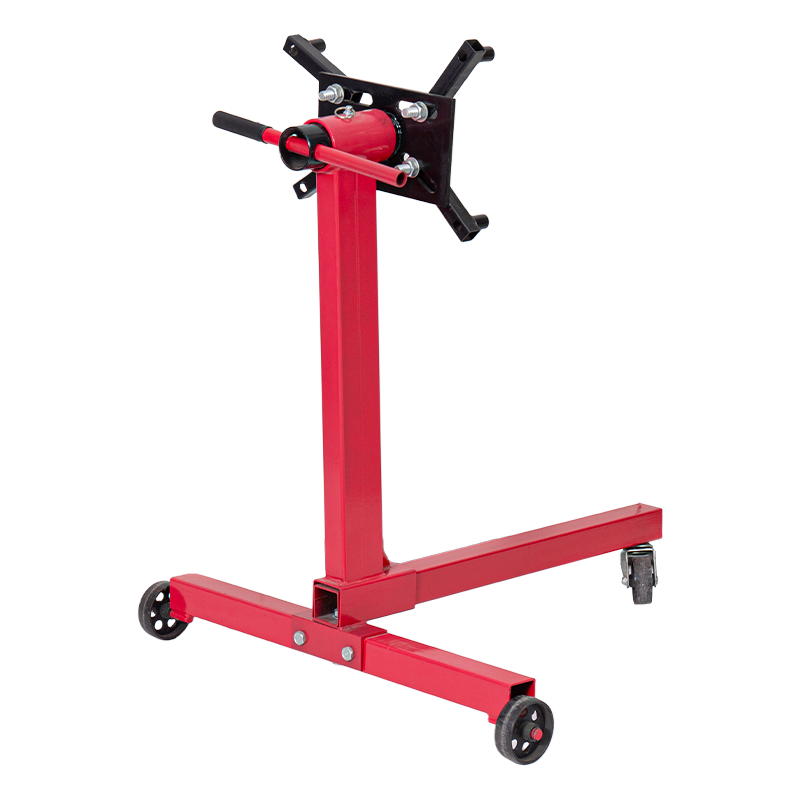
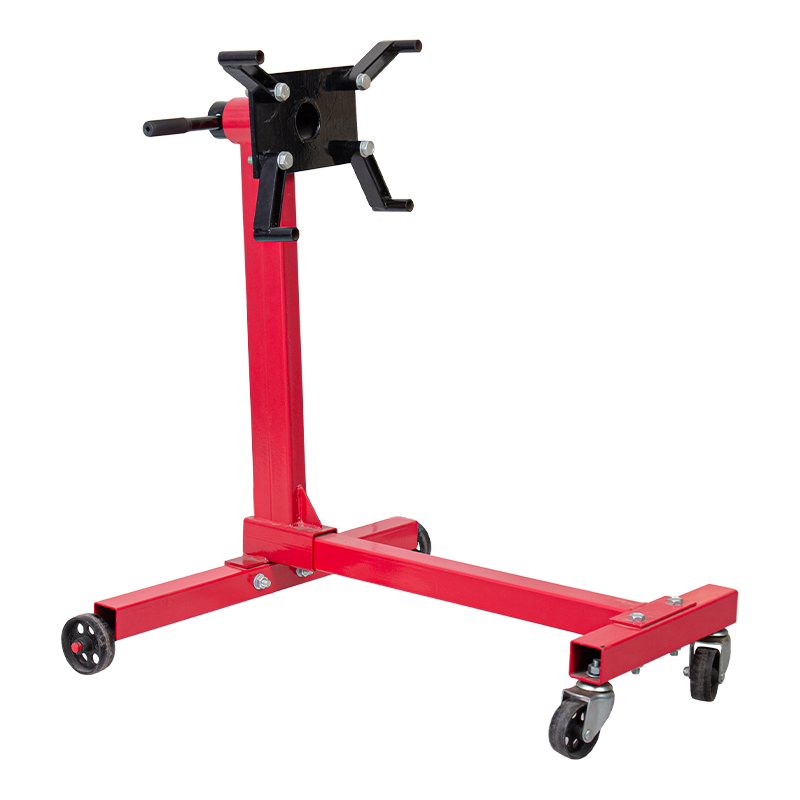
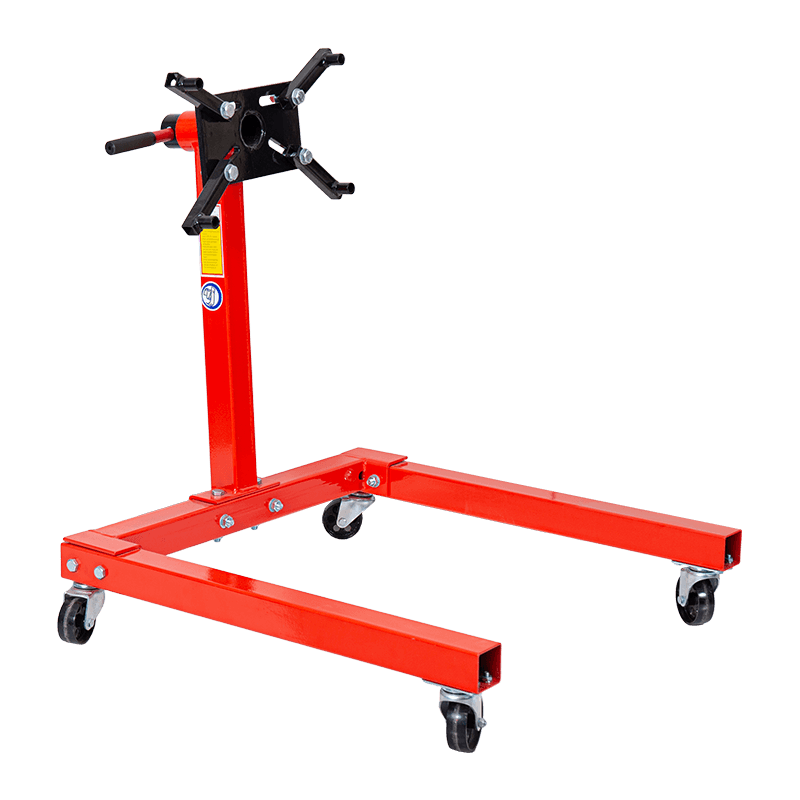
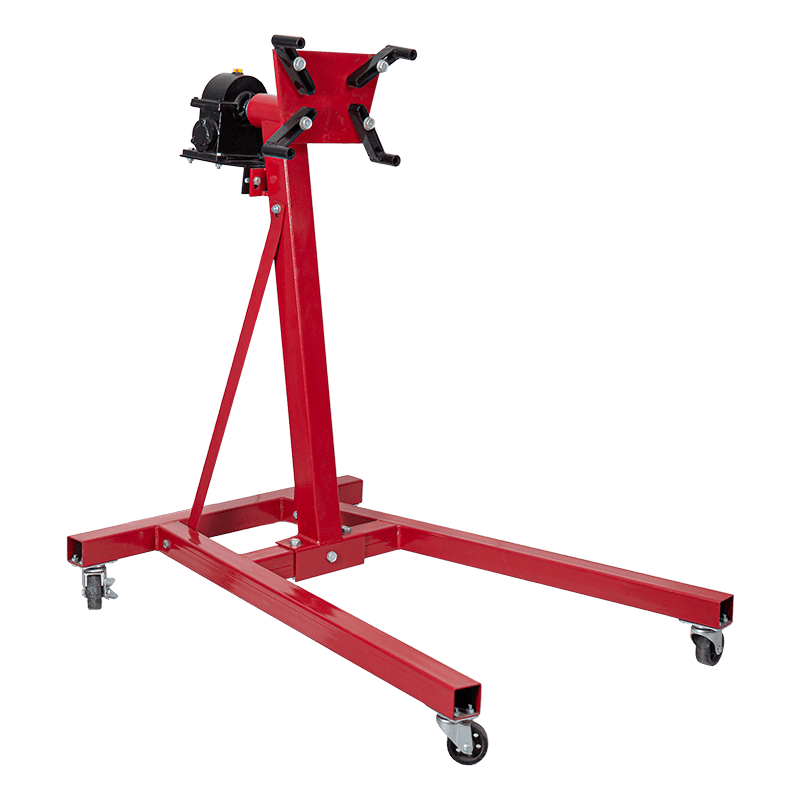
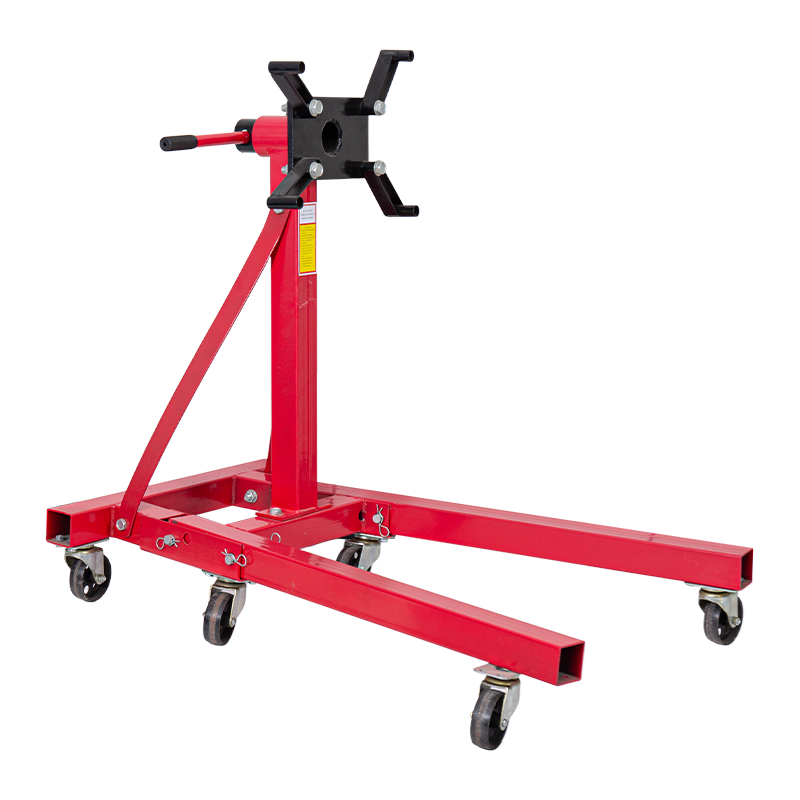
Zhejiang Vermillion Import and Export Co., Ltd. manufactures Engine Stand units for engine overhaul, rebuild and storage work in automotive workshops, garages, vocational training shops and motorcycle service operations. The range covers 750 lbs, 1000 lbs, 1100 lbs, 1250 lbs, 1500 lbs and 2000 lbs rated capacities, with rotating crossbar heads, wheeled bases, steel-cradle platforms and adjustable-arm mounting systems.
We build these stands as part of a wider hydraulic and garage equipment programme that includes Shop Crane units, presses, jacks and lifting equipment, so a workshop can source a coordinated engine-handling set from one production and export partner in China.
What We Manufacture in This Category
An engine stand holds a powerplant rigidly while it is stripped, inspected and reassembled, and rotates it so every face of the block is reachable from a standing position. Our production covers the full working range from compact four-cylinder units to heavy six- and eight-cylinder stands, each built around welded steel tubing, a rotating mounting head and a positive locking mechanism.
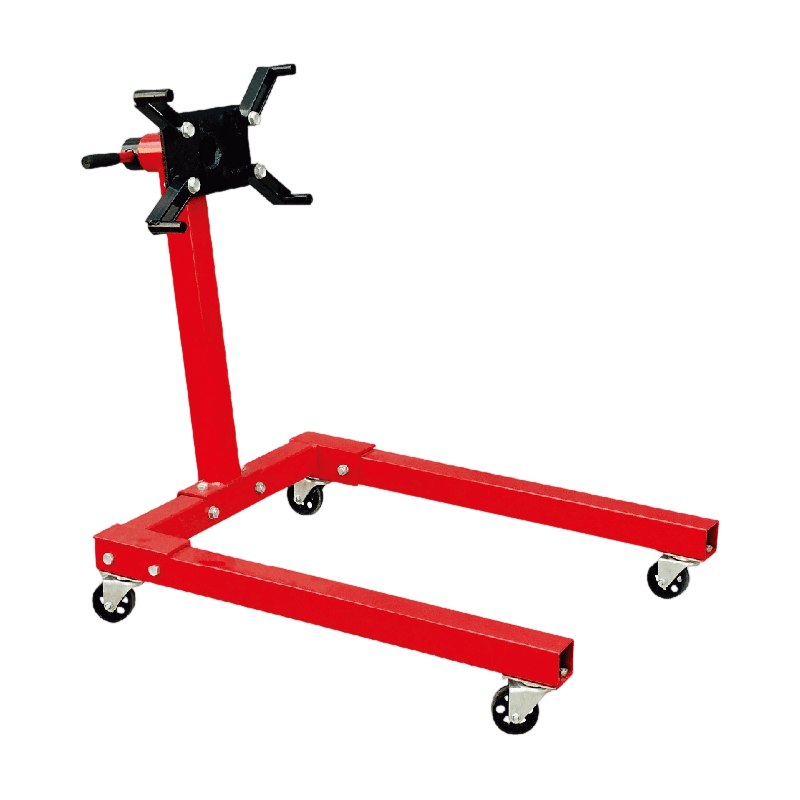
The mounting head is the functional centre of the product. We supply crossbar heads with sliding adjustable arms, hardened mounting fingers and retaining bolts, plus cradle-style platforms for engines that are better supported on a flat bed than on four arms. Rotation is indexed and locked with a handle or pin mechanism so the block cannot drift while torque is applied to stubborn fasteners.
Our Engine Stand Range and Application Fit
| Model | Capacity | Head / Base Type | Typical Application |
|---|---|---|---|
| OY5601 | 750 lbs | Rotating crossbar, 800 mm height | Four-cylinder petrol and small diesel engines, motorcycle powerplants, training shops |
| OY5602 | 1000 lbs | Four-arm head, wheeled base with locking casters | General automotive overhaul and assembly where the stand must be repositioned loaded |
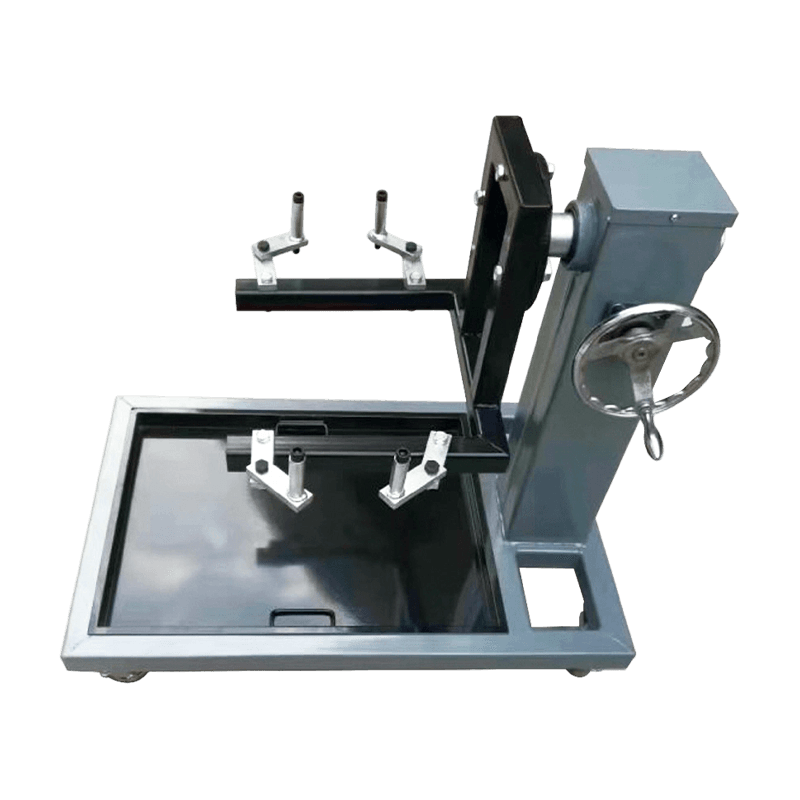
| OY5605B | 1100 lbs | Steel cradle platform | Blocks and assemblies that need broad flat support rather than four-point mounting |
| OY5603 | 1250 lbs | Professional head, 820 mm height, larger casters | Large six-cylinder and small eight-cylinder engines, mixed commercial fleets |
| OY5604 | 1500 lbs | Heavy-duty frame and mounting set | High-volume rebuild shops handling large displacement engines |
| OY8533 | 2000 lbs | Safety-lock rotation system | Heavy truck, industrial and marine engine work |
| OY5606 | 2000 lbs | Adjustable arms, cost-optimised frame | Workshops needing heavy capacity without motorised rotation |
Capacity selection follows the heaviest dressed engine the stand will carry, not the average. A fully assembled block with head, manifolds and flywheel can add substantially to bare-block weight, and the stand should be rated above that figure with margin for off-centre rotation.
Mounting Head, Rotation and Locking
- Adjustable arm heads — sliding brackets and hardened fingers accommodate different bell-housing bolt patterns; retaining bolts clamp the block to the head.
- 360-degree rotation — the head turns the engine to any working angle so sumps, timing covers, valve gear and main bearings are accessible without unbolting the block.
- Positive locking — a ratchet-detent or pin-and-handle mechanism holds the chosen index position; the OY8533 adds a safety-lock arrangement for heavy loads.
- Cradle alternative — the OY5605B replaces the crossbar with a wide steel platform for assemblies that should not hang from four arms.
Frame, Mobility and Workshop Fit
Frames are welded from steel tubing with reinforced gussets at the stress points, and the upright column is braced to resist the torsional load created when a heavy engine is rotated off-centre. The base footprint is extended for the same reason: a stand that is stable with the block vertical must remain stable when the block is turned 90 degrees.
Mobility is handled by swivel casters, with locking brakes available. On the 1000 lbs and larger models, dual-locking casters brake both wheel rotation and swivel action so the stand stays put when high torque is applied. Larger caster diameters on the 1250 lbs model reduce rolling effort under load and bridge floor joints and small surface irregularities more effectively.
Workshop planning note: allow clearance for the engine to rotate through a full turn. A stand at 800–820 mm working height needs headroom above the block and floor space around the base for the swing of a large sump or manifold.
Materials, Finish and Durability
Structural parts are welded steel, with hardened steel used for mounting fingers and load-bearing pins. A powder-coated finish resists oil, solvent and coolant contamination that is normal in engine rebuilding work, and it keeps the frame serviceable in a wet workshop environment.
Serviceability is deliberately simple: casters, locking handles, mounting fingers and retaining bolts are the parts that wear or get lost, and they are replaceable. We supply spare parts on a continuing basis so a stand stays in service rather than being scrapped over a single damaged component.
OEM and ODM Customisation
We produce engine stands under customer brands as well as under our own model numbers. Customisation covers laser marking of the customer logo, colour box and carton printing, and multi-language manuals in English, Spanish, French, Japanese and other languages.
- Structure and parameter adjustment — working height, base dimensions, caster type and mounting-arm configuration can be adapted to regional standards and working habits.
- Wheel and caster options — standard wheels or casters, with locking-brake versions available, all selectable to customer requirements.
- Exclusive development — prototype design, sample production, testing and mass production for customer-specific or patented stand designs.
Quality Control and Acceptance
Our factory operates under an ISO9001 quality management system, and core hydraulic products carry CE certification. Production runs through full inspection rather than sampling alone, covering incoming steel, weld quality, head rotation and locking function, caster operation and finish before packing.
For project and distributor orders, we agree the inspection points and acceptance criteria with the customer before production, and we can supply the documentation set required for the destination market. Load testing, rotation and locking checks, and packaging verification are recorded as part of the shipment release.
Information We Use to Configure Your Solution
A quotation is only useful if it matches the engine mix and the way the stand will be used. We prepare the configuration from the following project inputs:
| Input | Why We Need It |
|---|---|
| Heaviest dressed engine weight | Sets the capacity class and the safety margin above the working load |
| Engine family and bolt pattern | Determines arm length, finger size and adapter compatibility |
| Mounting method preference | Crossbar arms or steel cradle platform |
| Workshop height and floor condition | Working height, caster diameter and rotation clearance |
| Mobility requirement | Fixed base, standard casters or locking-brake casters |
| Branding and packaging | Logo marking, colour box, carton print and manual language |
| Order structure | Trial quantity, bulk volume and container loading plan |
Packing data is available per model so container loading can be planned before the order is placed. For example, the OY5601 ships at 20 kg gross in an 86 × 18 × 18 cm carton, the OY5602 at 22 kg gross in 91 × 20 × 19 cm, and the OY5603 at 27.5 kg gross in 84 × 23 × 21.5 cm.
Related Equipment for a Complete Engine Bay
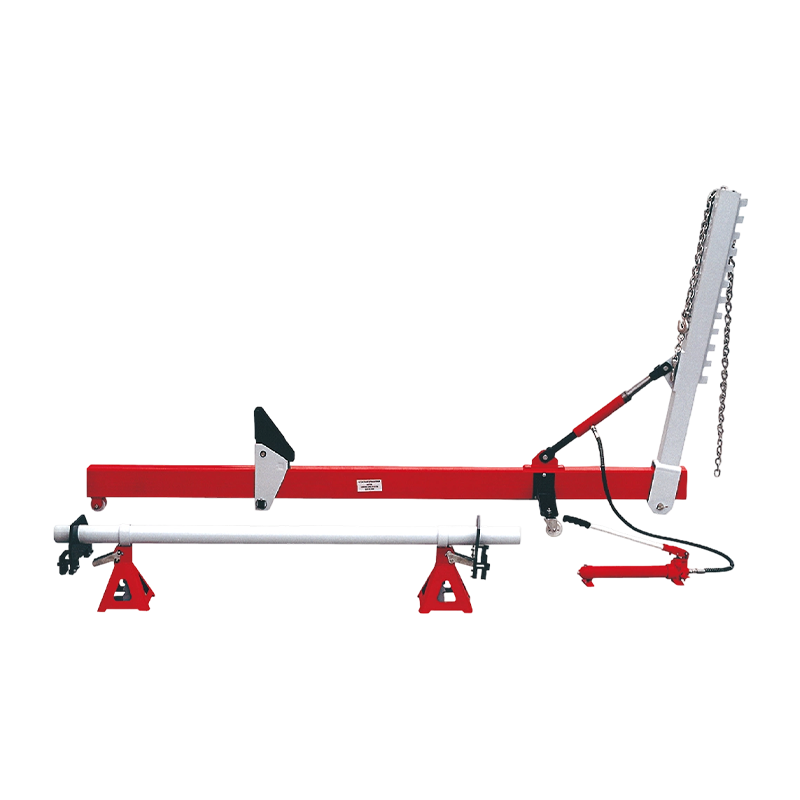
Engine stands are usually specified alongside other lifting and support equipment. Our Engine Support range holds a powerplant in the vehicle while the subframe or transmission is removed, and Jack Stand units provide the under-vehicle support that precedes engine removal. Together with our cranes and presses, these products let a distributor build a coherent garage equipment catalogue from one source.
Frequently Asked Questions
Which engine stand capacity should I choose for a V8 rebuild?
A dressed V8 with heads, manifolds and flywheel commonly exceeds the safe working load of a 1000 lbs stand. We recommend the 1250 lbs OY5603 or the 1500 lbs OY5604 for this work, and the 2000 lbs OY8533 or OY5606 where the engine is a heavy commercial or industrial unit.
Can the mounting arms be adapted to a non-standard bolt pattern?
Yes. The sliding brackets on our four-arm heads accept a range of bell-housing patterns, and the adapter set on the larger models covers wider mounting schemes including some commercial and industrial engines. Send us the bolt pattern or engine model and we will confirm the arm and finger combination.
Do you supply locking casters as standard?
Wheel and caster options are selectable. Standard wheels and casters are available, and locking-brake casters can be specified; on the 1000 lbs and larger models, dual-locking casters brake both wheel rotation and swivel action.
What is the difference between a crossbar head and a steel cradle stand?
A crossbar head mounts the engine on four arms through the bell housing and allows full rotation for access to every face. A steel cradle such as the OY5605B supports the assembly on a wide flat platform, which suits blocks and components that should not be suspended from four mounting points.
Can you produce engine stands under our own brand?
We provide OEM and ODM production with laser-marked customer logos, customised colour boxes and cartons, and manuals in multiple languages. Structural and parameter changes can also be made to suit regional standards and working habits.
What certifications apply to your engine stands?
Our factory operates under ISO9001 quality system certification, and core hydraulic products hold CE certification for European market sales. We confirm the applicable documentation for each model and destination before shipment.
