


 English
 русский
 Français
 Español
 عربى






 2026-10-30
 Industry News

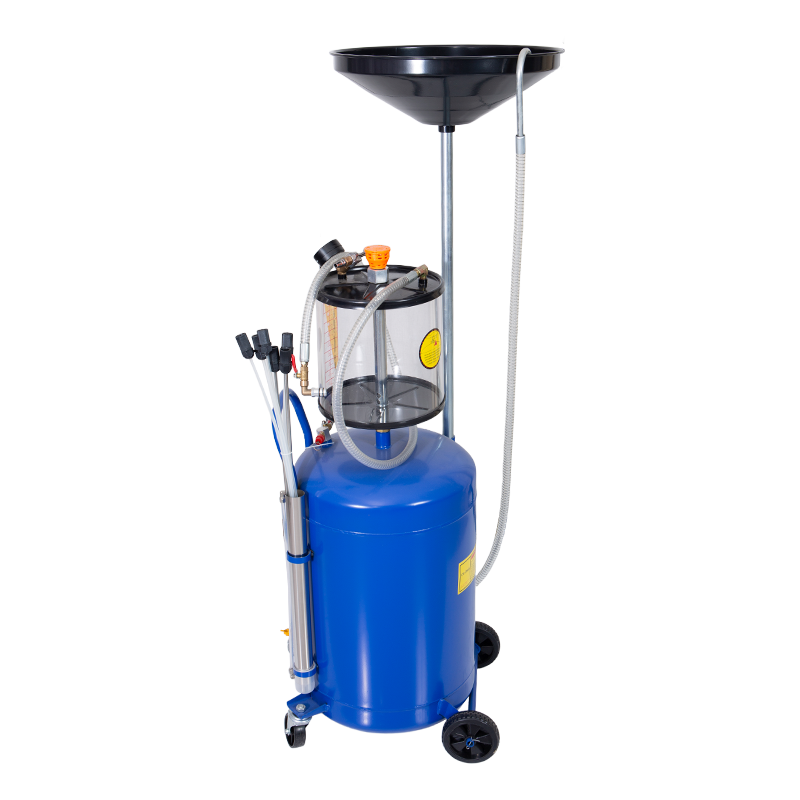
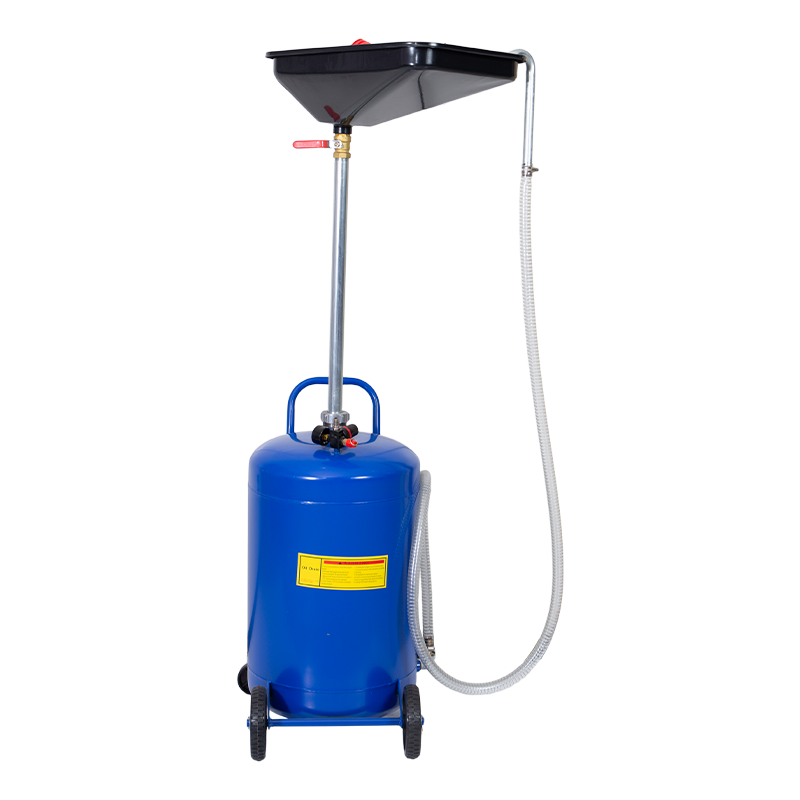
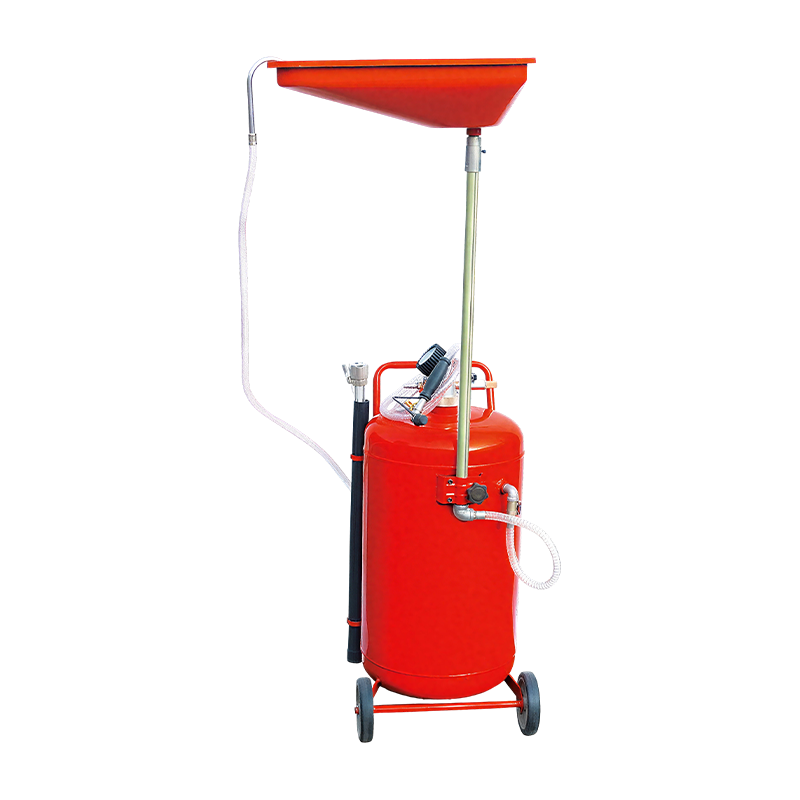
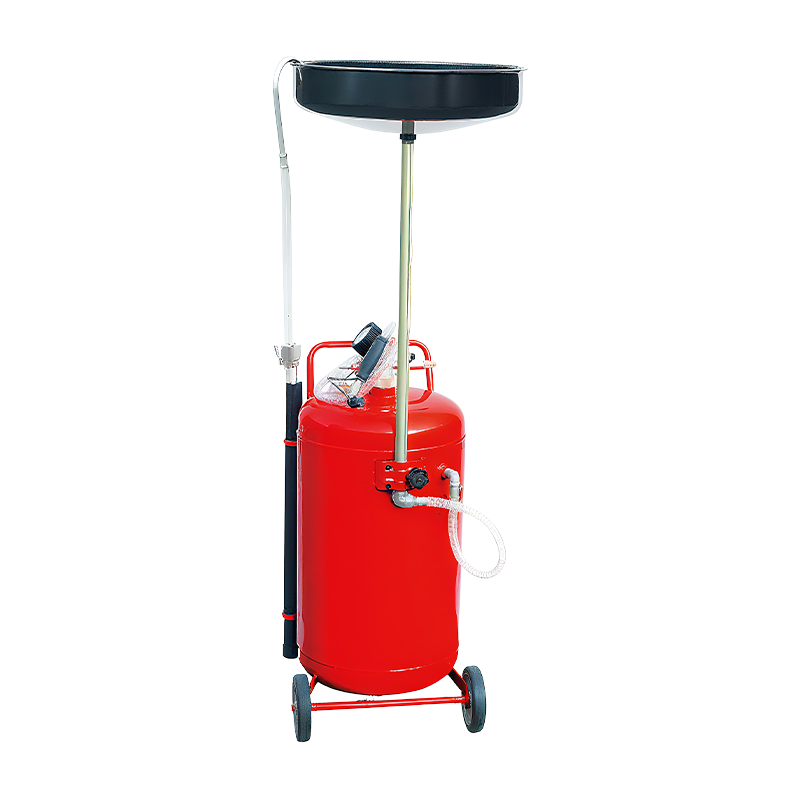
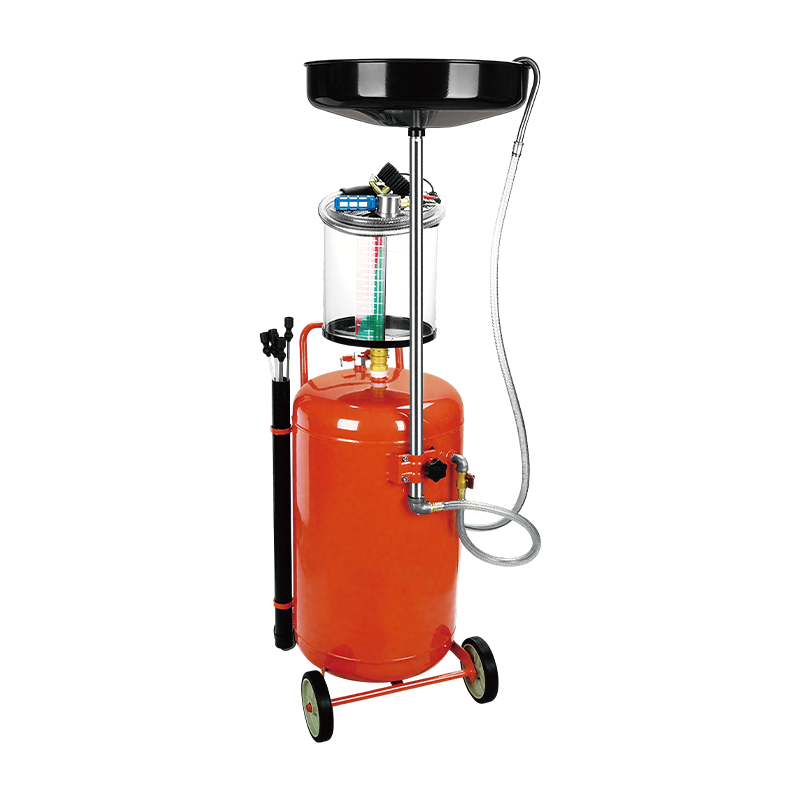
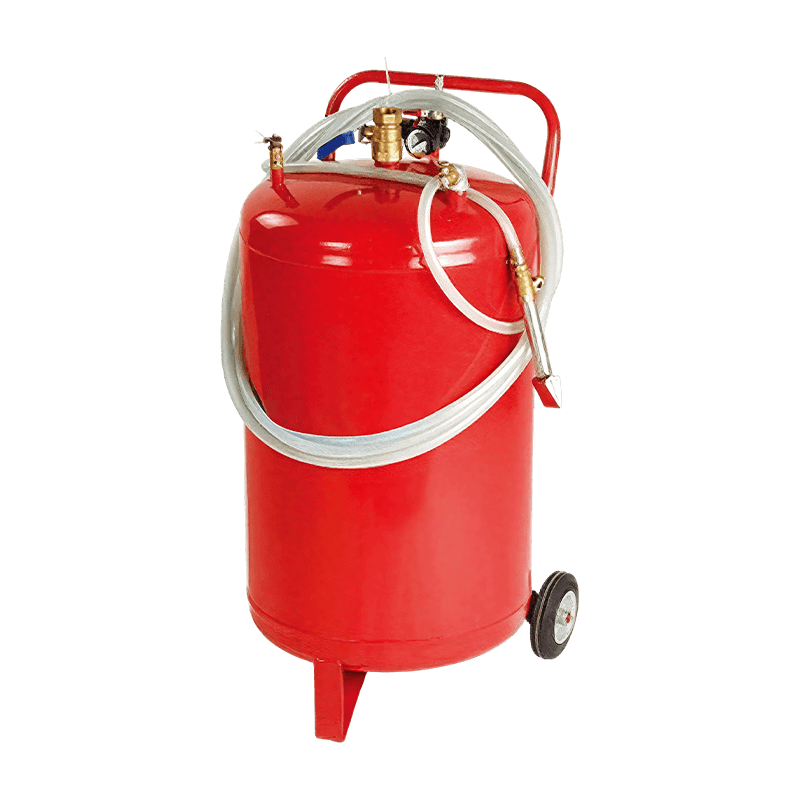
Zhejiang Vermillion Import and Export Co., Ltd. manufactures hydraulic machinery and maintenance tools in Jiaxing, Zhejiang, China. Our Collecting Oil Machine manufacturer programme covers pneumatic vacuum waste-fluid collectors built around an 80-litre reservoir, used in automotive workshops, fleet depots and motorcycle service bays to draw used engine oil, gear oil and transmission fluid directly from the drain point into a sealed tank. The range is supplied to distributors, brand owners and engineering clients who need a repeatable fluid-handling tool instead of open drain pans.
The collectors sit inside a wider garage equipment line that also includes our Shop Press, Motorcycle Lift and Jack ranges, so a workshop can be equipped from one production and logistics base.
What the Collecting Oil Machine Range Covers
As a Collecting Oil Machine Manufacturers manufacturer, we match product configuration to the application, operating limits, interfaces and acceptance criteria defined for each project.
Every unit in the family works on the same principle: shop air creates a vacuum in a sealed tank, the vacuum pulls fluid through a probe or suction hose, and the fluid is stored until it is emptied through the discharge outlet. Nothing is pumped through an open channel, so floor contamination and spill risk during an oil change are reduced.
Surface skimmers and gravity separators are a different equipment class. The OYOL family is a vacuum extraction and containment system — it removes fluid from a sump, drain plug or reservoir and holds it in a closed vessel for proper disposal or recycling.
- Six 80-litre models covering standard, wide-tank, basin-equipped, foam-control and high-flow configurations.
- Pneumatic operation — no electrical connection at the collection point.
- Dual-reservoir options that add a 10-litre basin for secondary containment during messier fluid removal.
- Foam-management variants for gear oils, ATF and mixed fluids that foam under vacuum.
Model Range and Application Fit
| Model | Reservoir | Stated operating data | Typical fit |
|---|---|---|---|
| OYOL1001 Standard Vacuum | 80 L tank | Vacuum 0 to −0.08 MPa; air 8–10 kg/cm²; 0.8 L/min at F4.5 mm, 1.6 L/min at F6.5 mm; max pressure 4 kg/cm²; 21.5/20 kg | General oil changes in independent garages, fast-fit centres and multi-bay workshops |
| OYOL1002 Wide-Tank Vacuum | 80 L tank, wider body | Core specification shared with OYOL1001 | Bays with limited height clearance or where a lower, wider footprint is preferred |
| OYOL1003 Standard-Basin | 80 L tank + 10 L basin | Vacuum 0 to −0.08 MPa; air 8–10 kg/cm²; 0.8 and 1.6 L/min; max pressure 4 kg/cm²; two-carton packing 53×46×84 cm and 57×39×40 cm | Routine servicing where incidental drips need secondary containment |
| OYOL1003B Basin-Equipped Vacuum | Dual reservoir, 80 L + basin | Vacuum collection with basin separation | Workshops that want vacuum speed and a separate containment tray in one unit |
| OYOL1007 Foam-Control | 80 L tank | Air pressure 1–2.5 bar; max pressure 3 bar; 15/14 kg; packing 450×390×800 mm | Transmission specialists and mixed-fleet bays handling ATF and gear oils that foam |
| OYOL1015 High-Flow Foam-Assist | 80 L tank, largest footprint | High-flow configuration with foam assistance | High-volume service operations where collection time per vehicle matters |
Where Vacuum Fluid Collection Belongs
The collectors are built for the fluid side of a service bay rather than for process plants. Their value shows up wherever used oil has to leave a vehicle or machine quickly, cleanly and without a technician handling a full drain pan.
- Independent garages and fast-fit centres — repeated oil changes on mixed vehicle types.
- Multi-bay service centres and fleet depots — an 80-litre tank holds fluid from several vehicles before emptying.
- Transmission and driveline workshops — ATF and gear oil recovery where foaming is common.
- Motorcycle and small-engine workshops — low-volume sumps that still need clean extraction.
- Plant and equipment maintenance — hydraulic reservoirs, gearboxes and final drives drained in situ.
Fluid Behaviour, Materials and Working Conditions
The stated medium for the standard models is lubricating oil. In practice the working point depends on viscosity, temperature and how much air the fluid carries, and those three variables decide which port and which model suit the job.
- Port selection drives flow. The F4.5 mm port gives 0.8 L/min and the F6.5 mm port gives 1.6 L/min on the standard family — a narrow port for cold, high-viscosity fluid and a wide port for warm fluid and shorter cycle times.
- Foaming fluids need a different setting. The foam-control models run at 1–2.5 bar air pressure with a 3 bar maximum, which keeps agitation low enough to limit foam build-up in the vessel.
- Sealed containment. Fluid is held in a closed tank, so odour and splash are contained until the unit is emptied through the discharge outlet.
- Secondary containment. The 10-litre basin on the OYOL1003 and OYOL1003B catches incidental drips during probe removal and hose handling.
Critical Specifications and Configuration Choices
We configure each order around the working point rather than around a single catalogue number. The variables that change between installations are consistent across the family.
- Vacuum degree — 0 to −0.08 MPa on the standard and basin models.
- Air supply — 8–10 kg/cm² for standard units; 1–2.5 bar for foam-control units.
- Collection speed — 0.8 L/min and 1.6 L/min through the two probe sizes.
- Maximum operating pressure — 4 kg/cm² on standard units, 3 bar on the foam-control model.
- Capacity — 80-litre main tank across the range, with an optional 10-litre basin.
- Transport data — packing sizes and gross/net weights differ per model and are confirmed on the order confirmation.
Air Supply, Installation and Bay Integration
These are pneumatic tools, so the bay needs a compressed-air outlet within hose reach of the vehicle. There is no electrical connection at the collection point, which keeps the unit away from power routing in a wet floor area.
Installation is floor-level. The unit is positioned beside the lift or service position, the suction probe is inserted into the sump or drain point, and the air line is coupled. We size the suction hose and probe set to the sump depth and drain-plug access of the vehicles in the fleet, and we match the discharge arrangement to how the site handles waste oil — decanting into a drum, a waste contractor's container or a recycling line.
Quality Control and Acceptance
Our factory holds ISO 9001 quality system certification, and core hydraulic products carry CE certification for European market sales. Production runs through full inspection, and each collector is checked for vacuum and pressure integrity, seal condition, hose and coupling fit, and packing completeness before it is released.
- Incoming and in-process checks on tank bodies, valves, hoses and fittings.
- Function testing of vacuum pull and discharge before packing.
- Documentation issued with the shipment, including the manual and the certification evidence that applies to the ordered models.
For project orders we agree the acceptance scope in advance — sample approval before mass production, inspection of the first article, and a pre-shipment check against the confirmed packing list.
OEM and ODM Programmes
We supply the collectors under our own brand or under a customer's. Logo laser marking is applied at no charge, and packaging can be produced as a colour box, carton and multi-language manual in English, Japanese, Spanish, French and other languages.
Our R&D team also adjusts pressure settings, dimensions, appearance and operating structure to suit regional standards across Europe, the Americas and Southeast Asia, and we run prototype design, sample production, testing and mass production for exclusive models. Trial orders are accepted alongside bulk shipments so a new market can be tested before volume commitments.
Maintenance, Spare Parts and Serviceability
The design keeps service work simple: empty the tank through the discharge outlet, clean the probe and strainer after handling heavy or contaminated fluid, and inspect hoses, seals and couplings at each service interval. Foam-control units should be checked for residue in the vessel after ATF or gear-oil work.
We supply long-term spare parts for the range and provide operation video tutorials for workshop staff, so a distributor can support the product without returning units to the factory.
Information We Use to Configure Your Solution
| Project input | What it determines |
|---|---|
| Fluid types and typical viscosity | Probe port size, collection speed and whether a foam-control model is required |
| Vehicles or machines serviced per day | Tank capacity, emptying frequency and choice between standard and high-flow units |
| Available shop-air pressure and flow | Model family — standard units at 8–10 kg/cm² or foam-control units at 1–2.5 bar |
| Sump depth and drain-point access | Suction hose length and probe set |
| Waste-oil handling method on site | Discharge arrangement and whether a basin-equipped model is preferred |
| Brand, packaging and manual language | OEM/ODM scope, carton and colour-box artwork, manual translation |
| Destination market and compliance needs | Applicable certification evidence and documentation set |
Frequently Asked Questions
What is the difference between the OYOL1001 and the OYOL1003?
Both are 80-litre vacuum collectors with the same vacuum, air-pressure and collection-speed figures. The OYOL1003 adds a 10-litre oil basin for secondary containment and ships in two cartons, so it suits bays where incidental drips during probe handling are a concern. The OYOL1001 is the single-tank standard unit.
Which model handles fluids that foam, such as ATF or gear oil?
The OYOL1007 Foam-Control and the OYOL1015 High-Flow Foam-Assist units. They operate at 1–2.5 bar with a 3 bar maximum, which limits agitation during extraction and reduces foam overflow risk in the collection vessel.
What air supply do the collectors need?
Standard and basin models run on 8–10 kg/cm² shop air with a 4 kg/cm² maximum operating pressure. Foam-control models run on 1–2.5 bar with a 3 bar maximum. No electrical supply is required at the collection point.
Can the collectors be supplied with our own brand and packaging?
Yes. We apply customer logos by laser marking and produce colour boxes, cartons and multi-language manuals. Our R&D team can also adjust pressure settings, dimensions and operating structure for regional standards, and we handle prototype through mass production for exclusive models.
How is the unit emptied and what maintenance does it need?
Fluid is discharged through the outlet into the site's waste-oil container. Routine work is limited to cleaning the probe and strainer, checking hoses, seals and couplings, and inspecting the vessel after handling foaming fluids. We supply spare parts for the range over the long term.
What do you need from us to prepare a configuration and quotation?
Fluid types and viscosity, the number of vehicles or machines serviced per day, available shop-air pressure, sump depth and drain access, the site's waste-oil handling method, branding and packaging requirements, and the destination market. With those inputs we match the model, probe set, hose length and documentation package, and confirm packing and weights on the order.
