


 English
 русский
 Français
 Español
 عربى






 2026-10-30
 Industry News

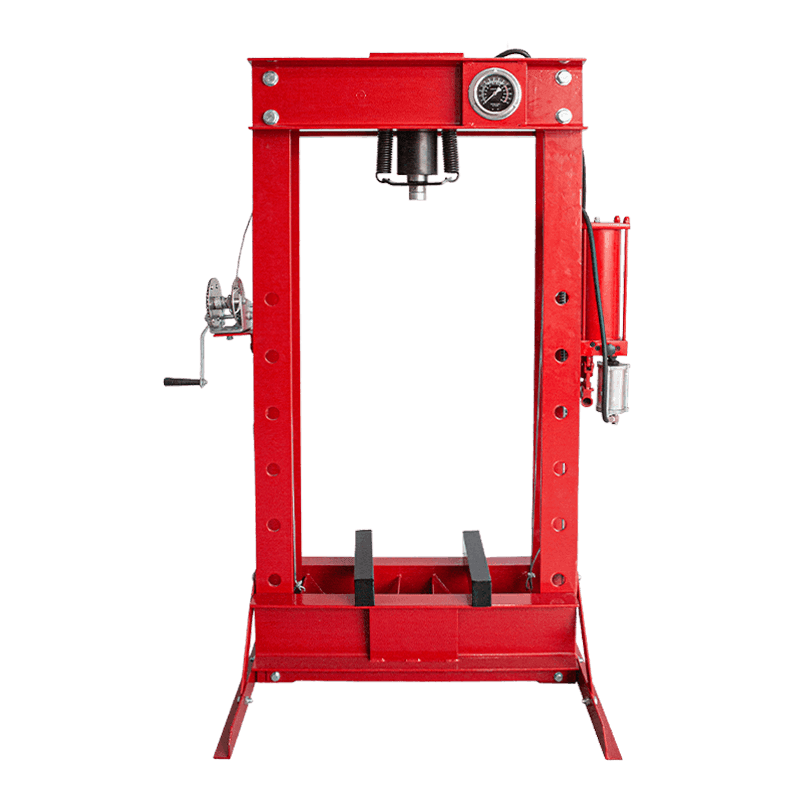
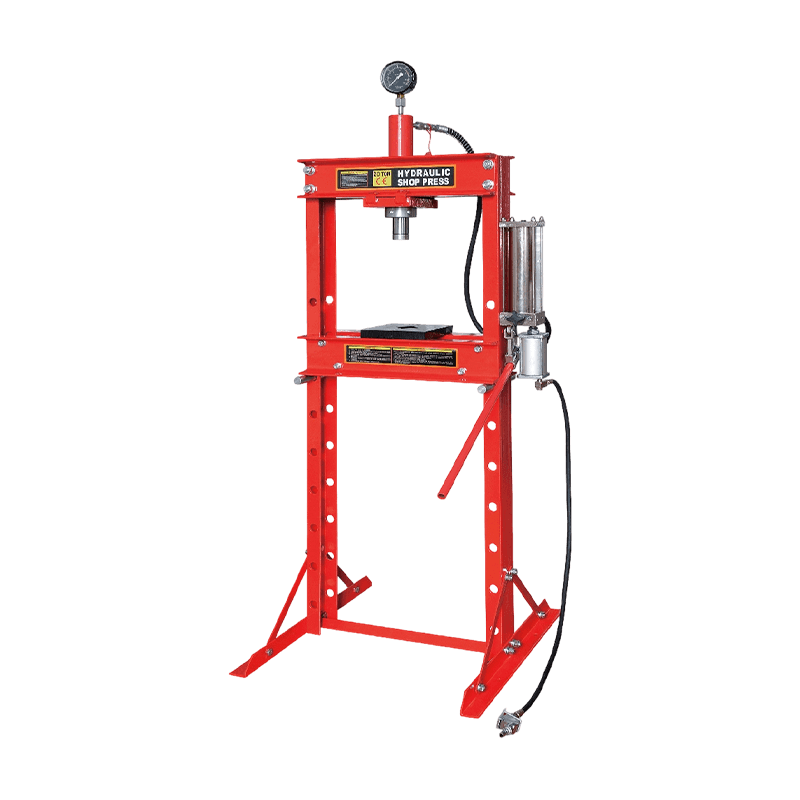
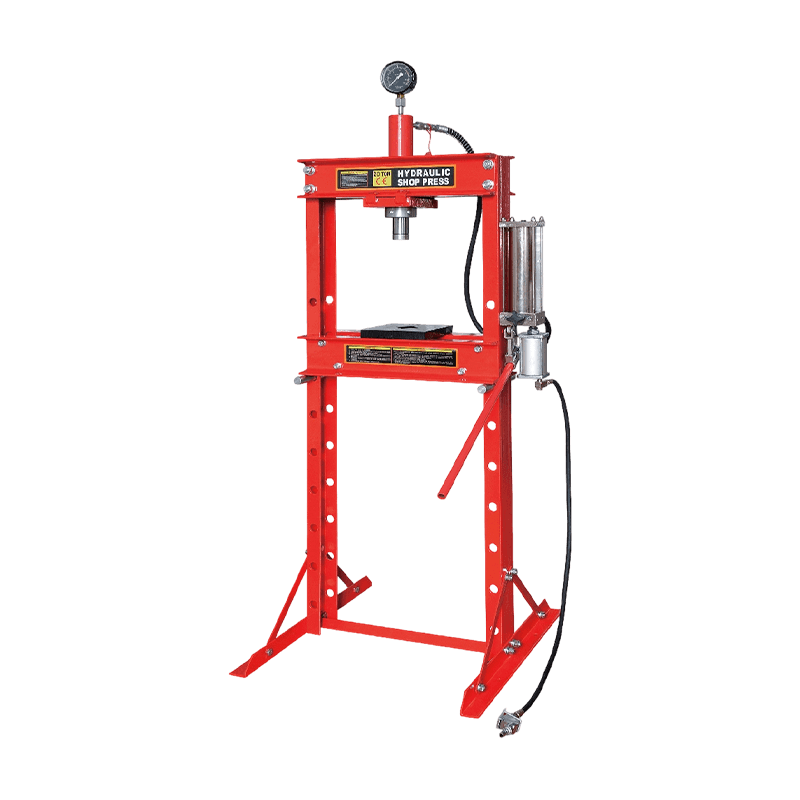
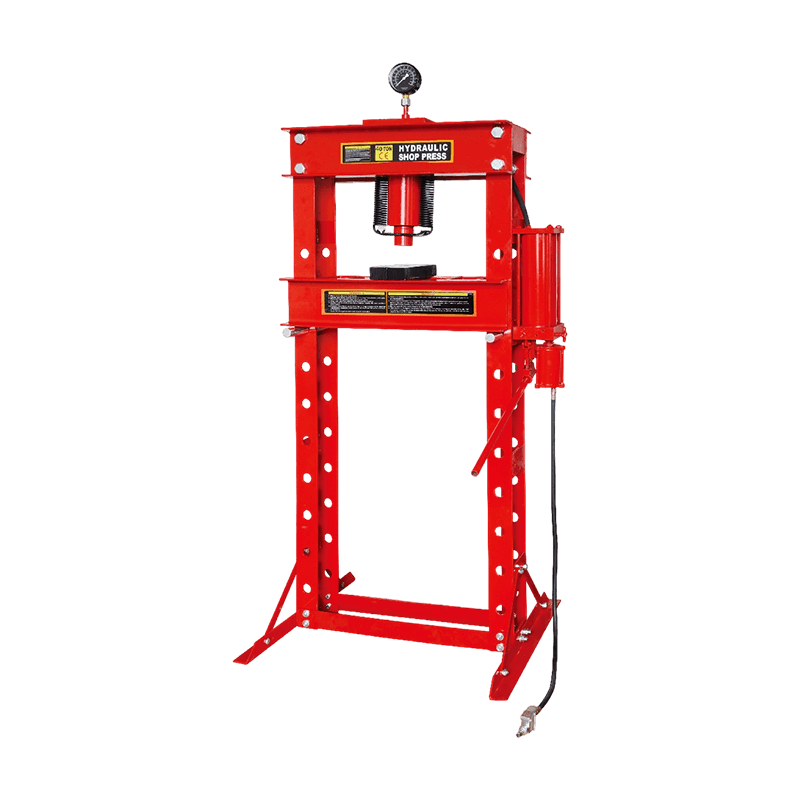
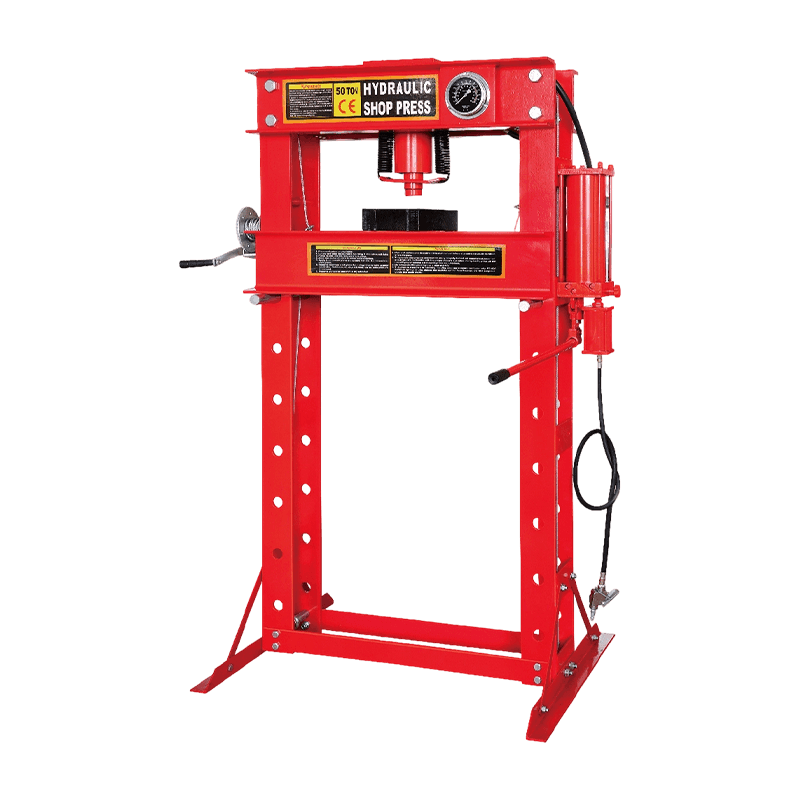
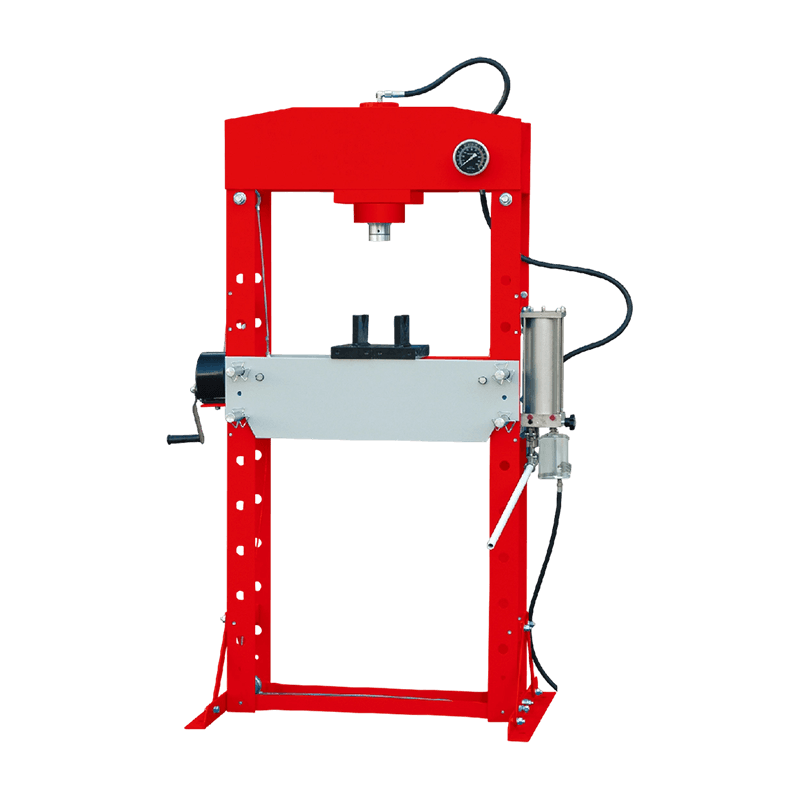
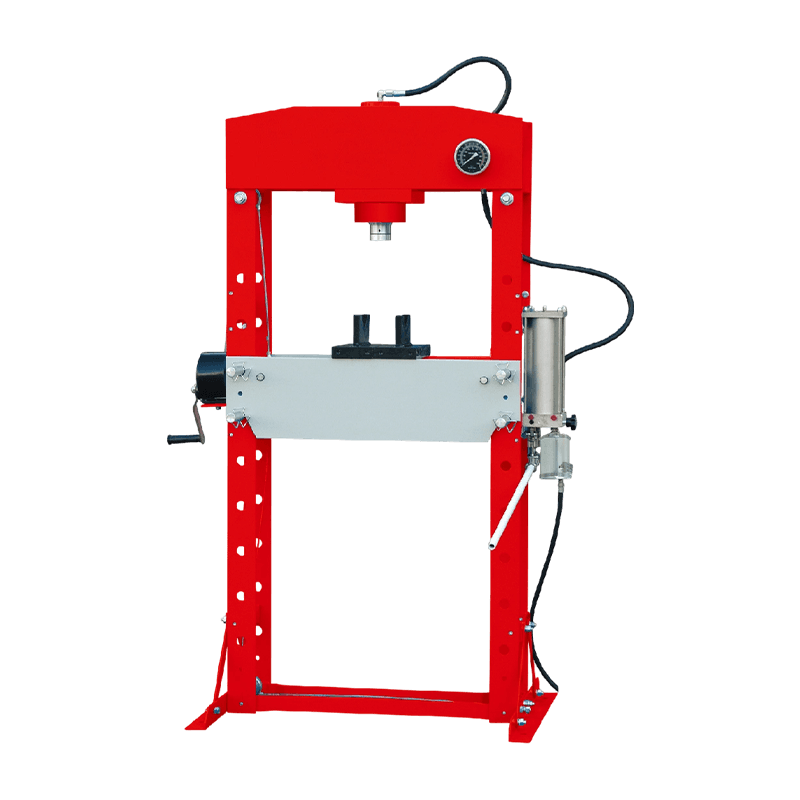
Zhejiang Vermillion Import and Export Co., Ltd. builds air-operated H-frame presses for workshops that need fast ram travel, clean operation and repeatable pressing force. Our pneumatic shop press range covers 20, 30, 40, 50 and 75 ton models, including dual-power and table-adjustable versions, for bearing and bushing work, U-joint and pulley removal, gear fitting, straightening, bending and light forming.
We are a Pneumatic Shop Press manufacturer working from Jiaxing, Zhejiang, with R&D, structural design and standardized production under one roof. The same frame and cylinder platform supports OEM and ODM programs for distributors, brand sellers and garage equipment projects.
Why Air Operation Changes the Working Cycle
A pneumatic press uses compressed air to drive the ram, so approach and retract strokes are quick compared with hand-pumped hydraulic units. That shortens each bearing or bushing cycle and reduces operator fatigue on repetitive jobs. Because the power medium is air rather than oil, the working area stays cleaner where leaking hydraulic fluid would contaminate parts or floors.
Force still comes from a hydraulic cylinder on our presses; the air circuit drives it. That combination keeps tonnage high while giving the speed and controllability expected from air-powered equipment. On dual-power models, the operator can switch between air and manual pumping when shop air is unavailable.
- Fast ram advance and retraction for production-style pressing and straightening.
- Clean operation where oil leakage is unacceptable.
- Consistent pressing force across repeated cycles.
- Dual-power option for sites with intermittent air supply.
Our Pneumatic Shop Press Range
Every model shares the H-shaped steel frame, adjustable work table and air-over-hydraulic power unit. The differences are capacity, table adjustment method and safety configuration, which is how we match a press to a specific workshop rather than a single generic specification.
| Model | Capacity | Configuration | Typical Fit |
|---|---|---|---|
| OY2020C | 20 ton | Dual-power (air + manual) | General repair bays, small bearings and bushings |
| OY2030 | 30 ton | Standard pneumatic | Garage and fleet maintenance |
| OY2040 | 40 ton | Heavy-duty pneumatic | Truck, bus and heavy component pressing |
| OY2040-2 | 40 ton | Safety-configured pneumatic | Sites with stricter guarding requirements |
| OY2050 / OY2050Q | 50 ton | Industrial; Q version with adjustable table | High-force industrial pressing and straightening |
| OY2075Q | 75 ton | Professional, adjustable table | Heavy fabrication, large shafts and press-fit assemblies |
The full Shop Press family also includes Hydraulic Shop Press and Electric Shop Press lines, so a workshop can standardize on one frame platform while choosing the power source that matches its air, manual or electrical infrastructure.
Application Fit and Workpiece Considerations
Air presses suit work where the ram must travel repeatedly and the workpiece is held on a table between the frame uprights. The table height, bed width and open height determine what actually fits, so these dimensions matter as much as tonnage.
- Bearing and bushing installation or removal on hubs, axles, transmissions and electric motors.
- U-joint, pulley and gear work where controlled force prevents damage to adjacent parts.
- Straightening and bending of shafts, rods, brackets and light structural sections.
- Stamping and light forming with suitable tooling and a flat, supported bed.
- Motorcycle and small-engine service where a compact 20–30 ton press fits the bench area.
Workpiece material affects the required force and the tooling used. Press-fit steel components need more tonnage than aluminum or bronze bushings of similar diameter. Long shafts need support along their length to avoid deflection, and thin-walled parts benefit from a driver or sleeve that spreads load across the contact face.
Frame, Cylinder and Table Construction
The H-frame is the structural backbone. We build it from formed steel channels with welded cross members, sized so the uprights resist the bending loads generated at rated capacity. The cylinder mounts to the upper cross beam, and the ram acts downward onto a table supported by pins or a sliding carriage, depending on model.
- Adjustable work table with multiple pin positions or a sliding carriage on Q models.
- Air-over-hydraulic power unit with pressure regulation and a gauge for setting working force.
- Pressure relief to protect the frame and cylinder from overload.
- Return spring or powered retract depending on configuration.
- Optional pressure gauge, foot control and guarding for production environments.
Air Supply, Installation and Safety
A pneumatic press needs a clean, dry air supply at stable pressure. Moisture and oil carryover shorten seal life and cause erratic ram movement, so a filter-regulator-lubricator unit or a dry-air point at the press is normal practice. We specify the working pressure range and air consumption for each model so the shop compressor and line size can be checked before delivery.
- Foundation and leveling: presses should stand on a level, load-bearing floor; larger models benefit from anchor points.
- Air connection: correct hose diameter and a shut-off valve at the press.
- Operator safety: keep hands clear of the ram path, use rated tooling, and never exceed the rated capacity.
- Guarding: safety-configured models add protection around the pressing zone.
Quality Control and Acceptance
Our factory operates under an ISO9001 quality management system, and core hydraulic products carry CE certification. Production runs through full inspection rather than sampling, covering frame welds, cylinder sealing, air circuit function and rated-pressure testing before packing.
For project orders, we can agree on an acceptance scope in advance: functional test at rated pressure, ram travel and retract check, table adjustment check, and a visual and dimensional inspection against the approved drawing. Test records and inspection reports can be prepared to match the documentation set required at the destination.
OEM, ODM and Custom Configurations
We support OEM and ODM programs for distributors and brand owners. Customization covers branding, packaging and product structure, with the engineering team adjusting pressure, dimensions, appearance and operating layout to suit regional standards and working habits in Europe, North America, Southeast Asia and other markets.
- Logo and packaging: laser marking, color box, carton and multi-language manuals.
- Parameter optimization: tonnage, table size, open height and control layout.
- New product development: prototype design, sample production, testing and mass production.
- Spare parts and service: long-term spare parts supply and after-sales technical guidance.
Information We Use to Configure Your Solution
To prepare a workable configuration and quotation, we work from the actual job rather than a model number alone. The following inputs let us confirm tonnage, frame size, table type and control arrangement.
| Project Input | Why It Matters |
|---|---|
| Workpiece type, material and maximum diameter | Sets required tonnage and bed opening |
| Required force and pressing depth | Determines cylinder stroke and open height |
| Available air pressure and compressor capacity | Confirms air circuit and cycle speed |
| Cycle frequency and shift pattern | Points to standard or dual-power configuration |
| Floor space and bench layout | Selects frame width and table adjustment type |
| Branding, packaging and documentation needs | Defines OEM scope and manual languages |
| Destination market and compliance requirements | Aligns product configuration and certification evidence |
Maintenance, Documentation and Delivery Scope
Routine maintenance is straightforward: keep the air supply dry and filtered, check hose and fitting condition, inspect the table pins and frame welds periodically, and monitor cylinder seals for air or oil weep. We supply spare parts over the long term and provide operation guidance and video tutorials to support distributor after-sales teams.
Standard delivery includes the press, air connection fittings, operating manual and inspection documentation. Packaging is designed for container and LCL shipment, with carton and pallet arrangements agreed per order. Our location near Shanghai and Ningbo ports supports flexible shipping schedules for both trial orders and full-container volumes.
Frequently Asked Questions
What tonnage pneumatic shop press do I need for bearing work?
Most automotive bearing and bushing jobs sit comfortably in the 20–30 ton range. Truck, bus and heavy equipment components often need 40 ton or more. We size the press from the workpiece diameter, material and fit type rather than from tonnage alone.
Can the press run without shop air?
Yes. The OY2020C dual-power model allows manual pumping when air is unavailable, which suits mobile service units and sites with intermittent compressed air supply.
What air pressure and compressor capacity does a pneumatic press require?
Each model has a defined working pressure range and air consumption figure. We provide these values with the quotation so the compressor, receiver and line diameter can be checked against the press before installation.
Do you offer OEM branding and custom tonnage?
We do. Logo marking, color box, carton and multi-language manuals are part of our OEM service, and our R&D team can adjust pressure, dimensions and operating structure for market-specific requirements or develop a new model from prototype through mass production.
What certifications apply to your pneumatic presses?
Our factory holds ISO9001 quality system certification, and core hydraulic products carry CE certification. Certification scope for a specific model and destination market is confirmed during configuration.
How are the presses packed and shipped?
Presses are packed for container and LCL shipment with agreed carton and pallet arrangements. Shipping is coordinated from Jiaxing, close to Shanghai and Ningbo ports, for both trial orders and bulk volumes.
