


 English
 русский
 Français
 Español
 عربى






 2026-10-30
 Industry News

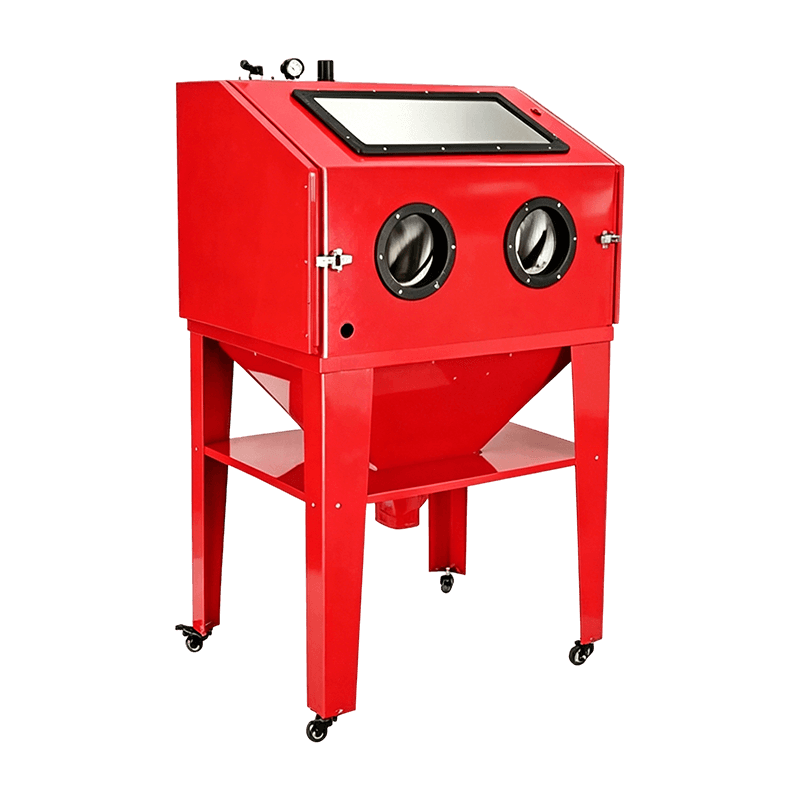
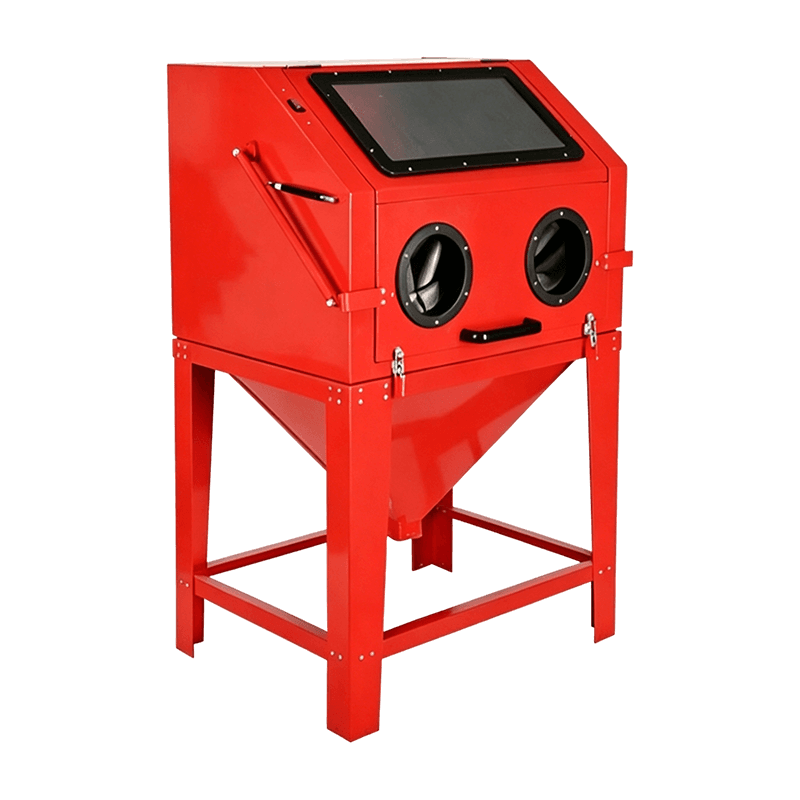
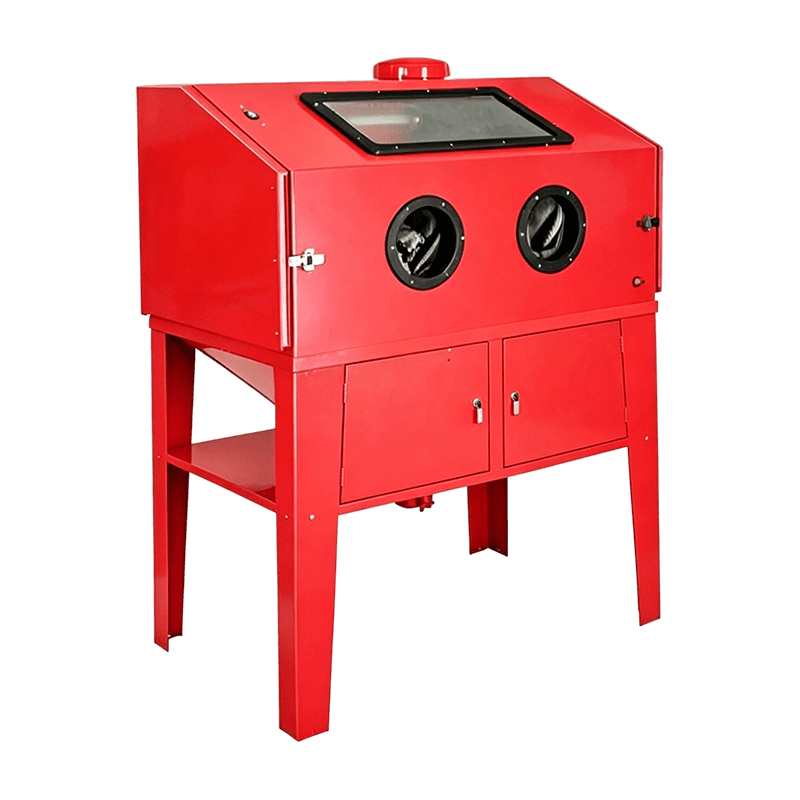
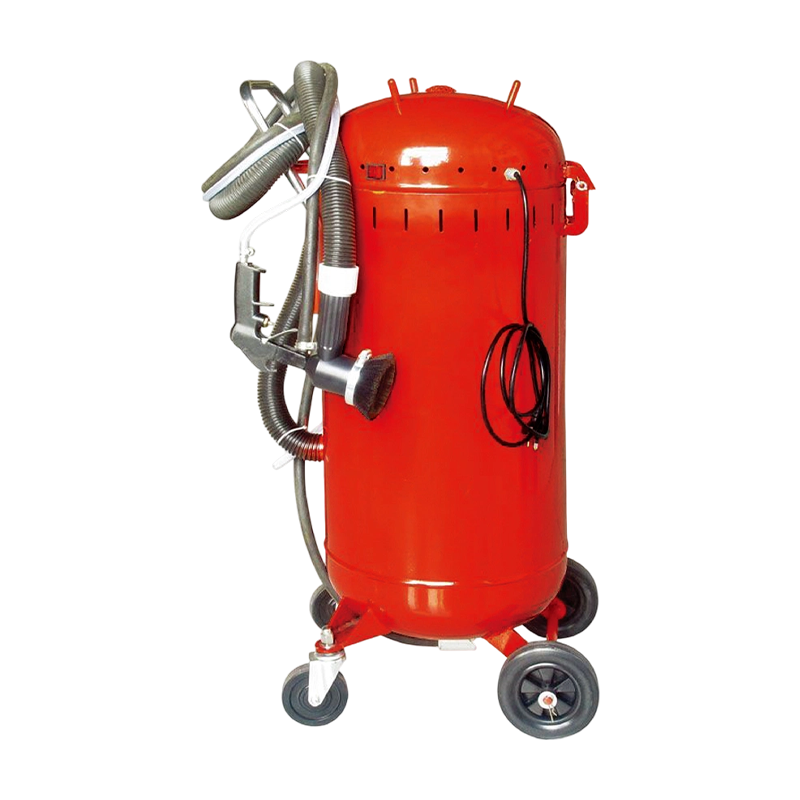
Zhejiang Vermillion Import and Export Co., Ltd. manufactures abrasive blasting equipment for automotive repair, metal fabrication, restoration and maintenance workshops. Our Sand Blaster manufacturer programme covers two formats: enclosed sandblaster cabinets from 90 to 450 litres, and pressurised sandblast tanks from 5 to 28 gallons. We build them in Jiaxing, Zhejiang, alongside our hydraulic Shop Press, Jack and Engine Stand lines, and supply distributors, brand owners and workshop operators across Europe, North America, Japan and Southeast Asia.
Both formats do the same job by different means: abrasive is accelerated and thrown against a surface to strip rust, paint and scale, or to etch and key a surface before coating. Cabinets contain media and dust inside a sealed chamber for repeatable work on smaller parts. Tanks carry the abrasive to the workpiece, which makes them the practical choice for large, fixed or outdoor structures. Production runs under an ISO 9001 quality management system, and core products carry CE certification.
Our Sand Blaster Range at a Glance
As a Sand Blaster Manufacturers manufacturer, we match product configuration to the application, operating limits, interfaces and acceptance criteria defined for each project.
| Model | Format | Capacity | Typical work | Key data |
|---|---|---|---|---|
| OY9002 | Compact cabinet | 90 L | Fasteners, brackets, fittings, carburettor parts | Working space 56 × 46 × 28 cm; 17 kg net; 160 pcs per 20 ft |
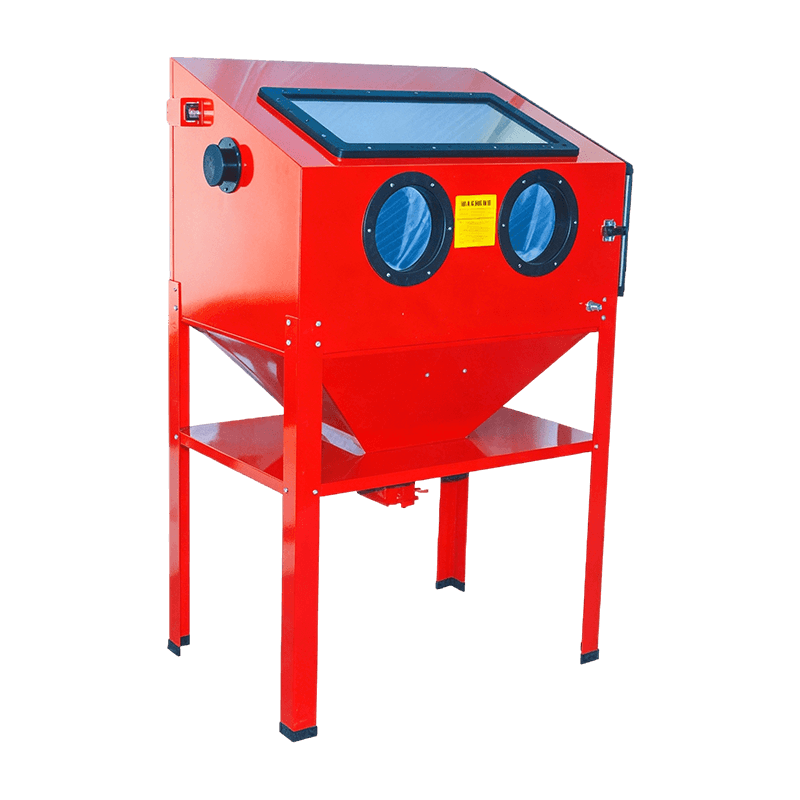
| OY9001A | Floor cabinet | 220 L | Small-to-medium automotive components, hardware | Working space 60 × 84 × 63 cm; 48 kg net; 63 pcs per 20 ft |
| OY9001B | Reinforced cabinet | 220 L | Continuous daily blasting in busy workshops | Reinforced structure over the standard 220 L class |
| OY9003 | Heavy-duty cabinet | 350 L | Larger components and higher duty cycles | Heavy-gauge chamber construction |
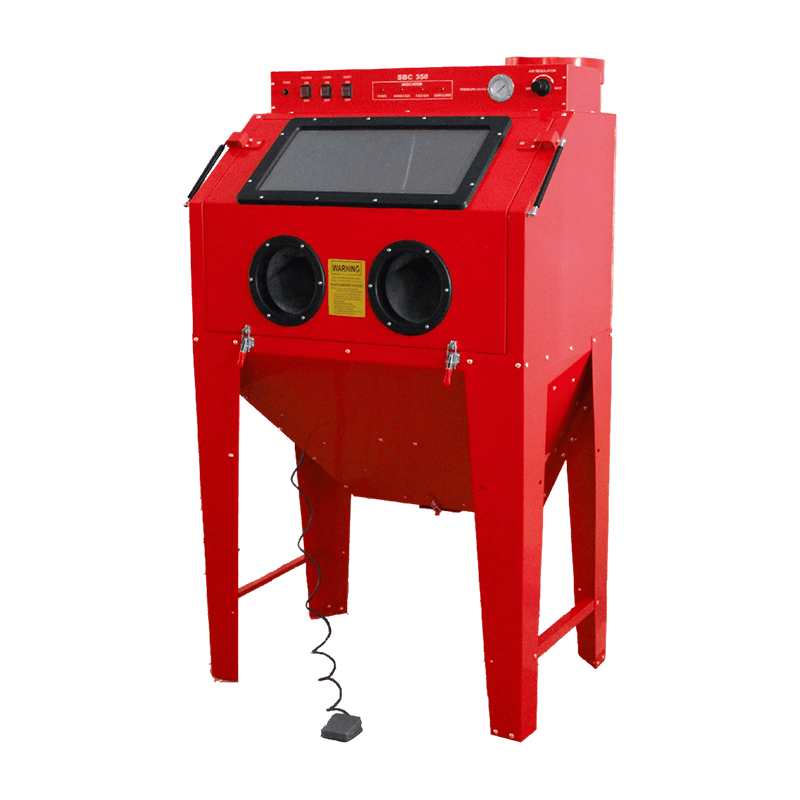
| OYSBC350 | Electrical cabinet | 220 L | Shops that want dust extraction at the cabinet | Integrated dust extraction |
| OYSBC350A | Electrical cabinet, large chamber | 350 L | Long or bulky parts that need a wider envelope | Enlarged interior working area |
| OYSBC350F | Cabinet with protective gloves | 350 L | Handling heavier parts inside the chamber | Protective-glove access, extraction |
| OYSBC450 | Extra-large cabinet | 450 L | Largest parts in the cabinet range | Highest chamber volume we supply |
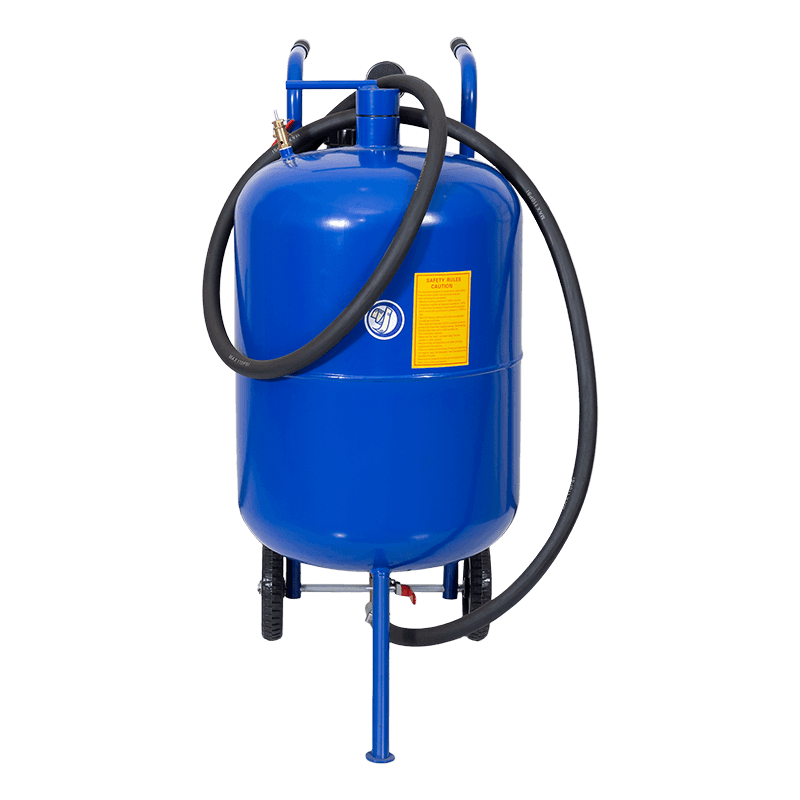
| OYB905 | Pressurised tank | 5 gal (approx. 19 L) | Spot rust removal, field and on-site work | 65–125 PSI; 6–20 CFM; 8 ft hose; 13 kg net; 318 pcs per 20 ft |
| OYB910 | Pressurised tank | 10 gal | Longer sessions between refills | Mid-size vessel |
| OYB920 | Pressurised tank | 20 gal | Sustained outdoor and structural blasting | Standard capacity |
| OYB928 | Heavy-duty tank | 28 gal | Large surface areas, extended blasting | Largest vessel in the tank range |
Enclosed Cabinets: 90 to 450 Litres
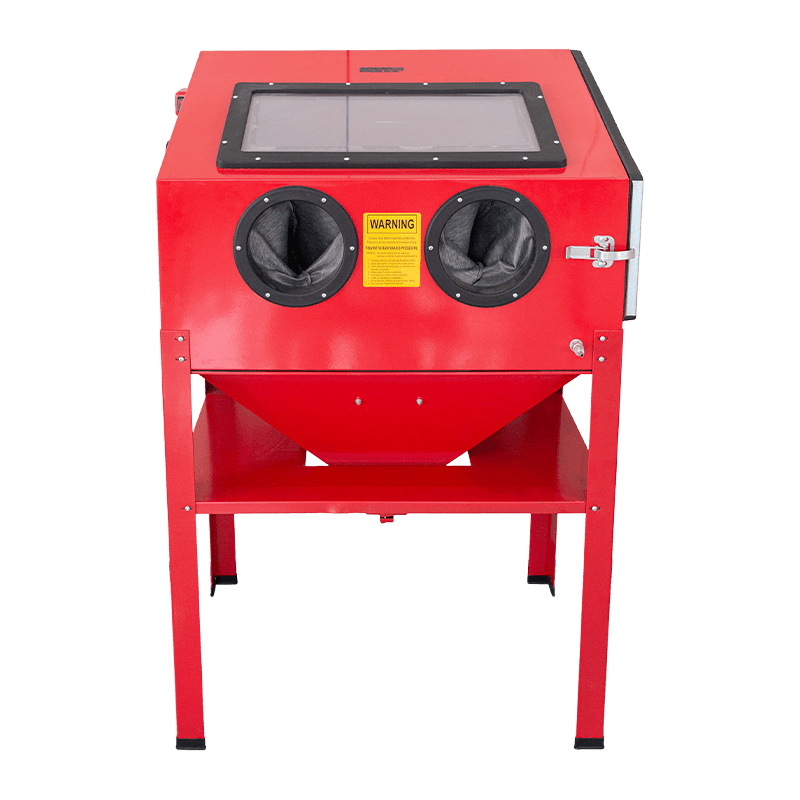
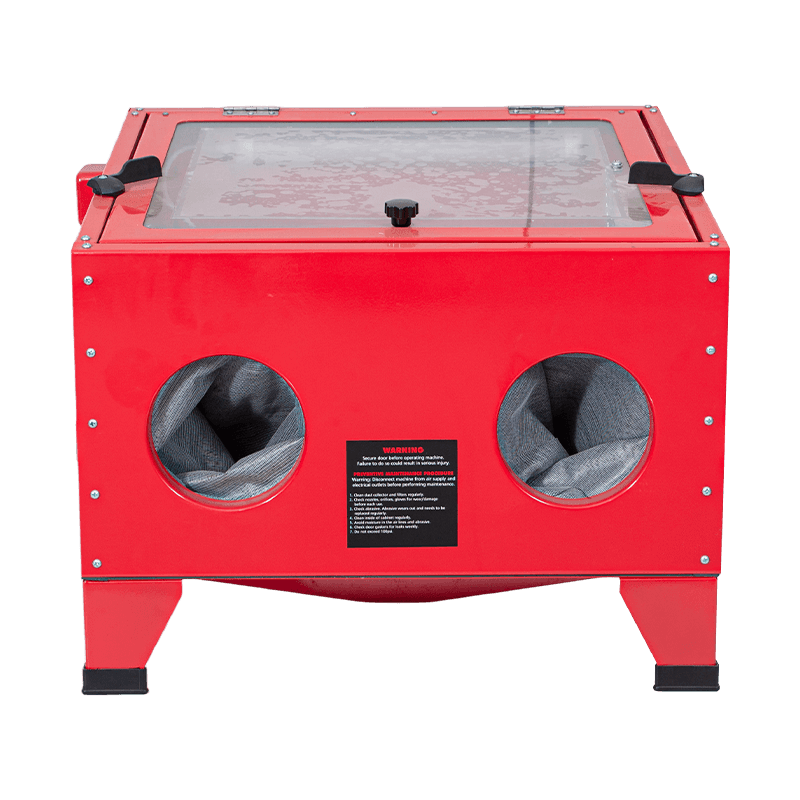
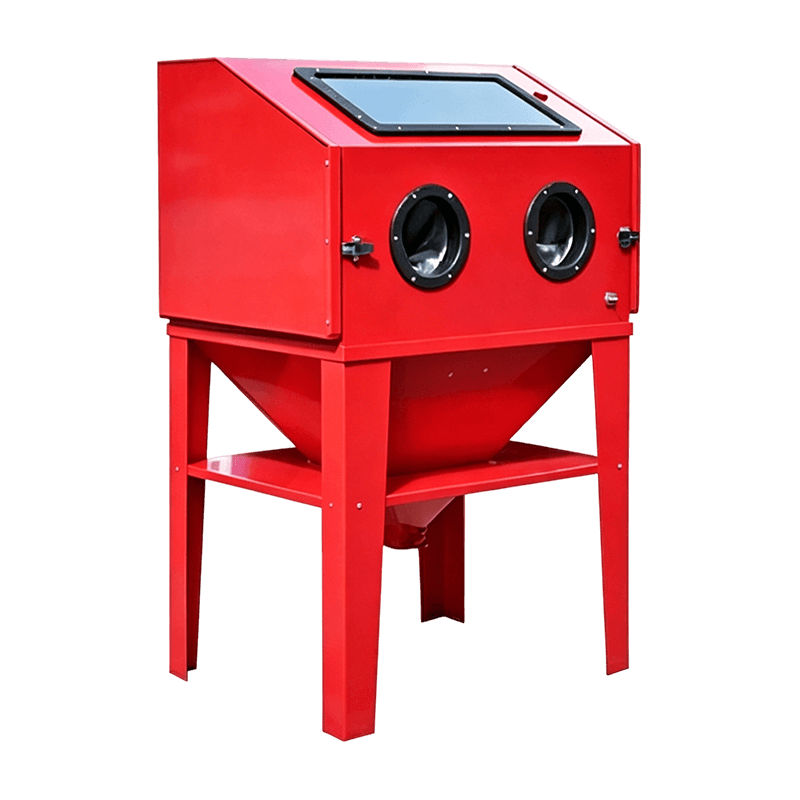
Cabinet models share one working principle: a sealed steel chamber, front glove ports, interior lighting and a viewing window, with a media collection tray at the base so abrasive can be recovered and reused. What changes across the range is chamber volume, working envelope, structural grade and how dust is handled.
- OY9002 — 90 L. Working space 56 × 46 × 28 cm at 17 kg net. A compact footprint for small fasteners, brackets and precision components, and a useful second unit in a larger shop where small parts should not occupy the main cabinet.
- OY9001A — 220 L. Working space 60 × 84 × 63 cm, 48 kg net, 63 units per 20 ft container. The general-purpose size for small-to-medium automotive components, hardware and brackets.
- OY9001B — 220 L reinforced. The same chamber class with a reinforced structure for workshops running blasting through the working day.
- OY9003 — 350 L heavy-duty. A larger chamber and heavier construction for bigger parts and higher duty cycles.
- OYSBC350, OYSBC350A, OYSBC350F. Electrical cabinets with dust extraction built into the unit, in 220 L and 350 L chambers. The 350F variant uses protective gloves so heavier parts can be handled inside the chamber.
- OYSBC450 — 450 L. The largest chamber we supply, for long or bulky components that will not fit a standard cabinet.
Pressurised Tanks: 5 to 28 Gallons
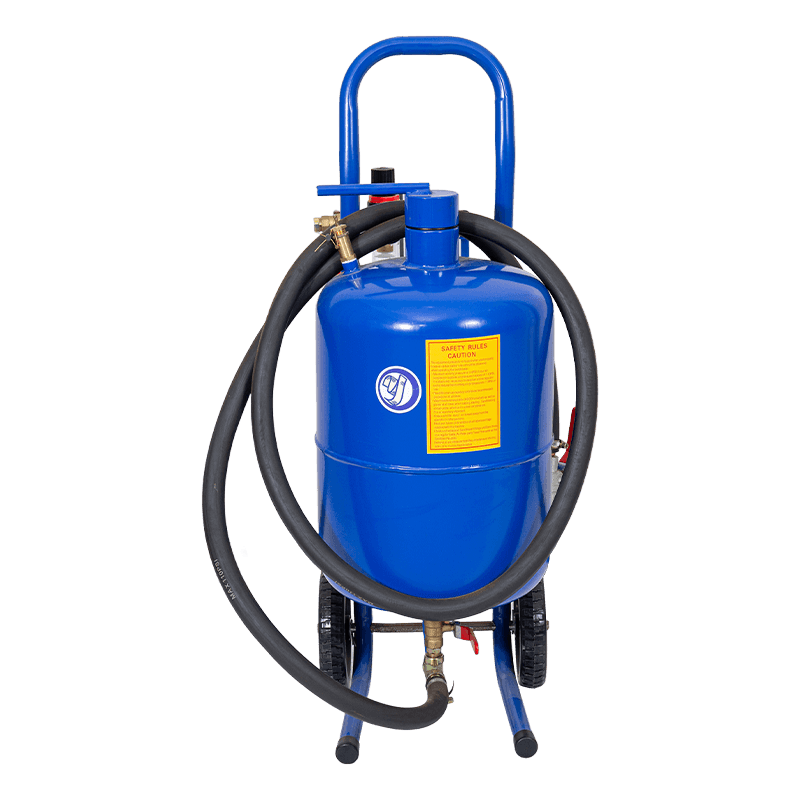
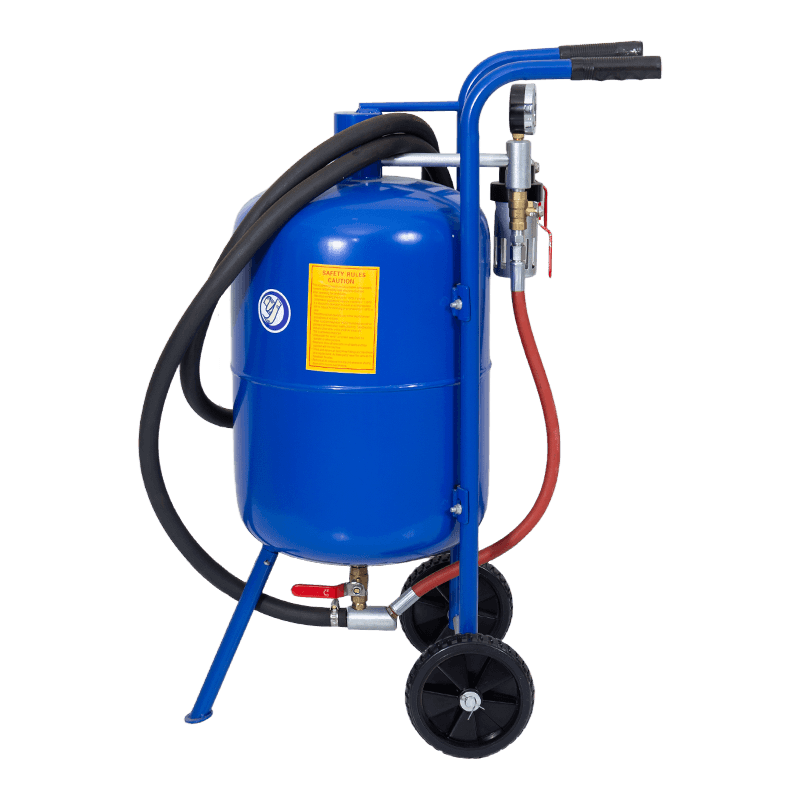
A pressurised tank pushes abrasive from a sealed vessel through a hose and nozzle, so the blast reaches the workpiece instead of the workpiece being placed in a chamber. That makes tanks the practical format for spot repair, field maintenance and large surface areas.
- OYB905 — 5 gallons (approx. 19 L). 83 cm high × 48 cm long × 29 cm wide, 13 kg net. Working pressure 65–125 PSI, air consumption 6–20 CFM, nozzle options 2/2.5 mm and 3/3.5 mm, 8 ft hose, six rubber wheels and a canvas hood. 318 units per 20 ft container.
- OYB910 — 10 gallons. A mid-size vessel for longer blasting sessions between refills.
- OYB920 — 20 gallons. Standard capacity for sustained outdoor and structural work.
- OYB928 — 28 gallons heavy-duty. The largest vessel in the range, for extended work across large surface areas.
Where Each Format Fits
| Workshop or task | Format we recommend | Reason |
|---|---|---|
| Automotive body shop, panel rust and paint stripping | OYB905 or OYB910 tank; OY9001A cabinet | Tank for panels blasted in place, cabinet for removable brackets and small parts |
| Engine and transmission rebuild shop | OY9002 or OY9001A cabinet | Contained cleaning of small castings, covers and fasteners |
| Metal fabrication and general engineering | OY9001A, OY9003 or OYSBC350A | Larger chamber for welded assemblies and plate |
| Restoration and heritage work | OY9002 or OY9001A | Controlled, repeatable finish on mixed small parts |
| Motorcycle service and repair | OY9002 | Compact footprint for small components |
| Construction, farm and fleet maintenance | OYB920 or OYB928 | Mobile units with no chamber size limit |
| High-volume production blasting | OYSBC350F or OYSBC450 | Large chamber, extraction and glove handling for heavier parts |
Air Supply, Media and Installation
Blasting performance is set by the compressor as much as by the unit. The OYB905 tank, for example, draws 6–20 CFM at 65–125 PSI, so a compressor that holds pressure under continuous flow will produce a steadier finish than a larger machine running at its limit.
- Compressor matching. Confirm free air delivery at the working pressure, not the tank rating, and allow for hose pressure drop over long runs.
- Nozzle selection. Smaller nozzles concentrate the blast for detail work; larger nozzles cover area faster but raise air demand.
- Abrasive choice. Media hardness and mesh drive cut rate and surface profile — coarse media for heavy scale, finer media where the substrate or finish is delicate.
- Dust and extraction. Electrical cabinets carry built-in extraction; tank blasting outdoors or in a bay needs ventilation and operator protection appropriate to the media in use.
- Floor space and access. Cabinet footprints range from the compact OY9002 package of 62 × 54 × 52 cm to the 96 × 62 × 61.5 cm package of the OY9001A, so plan loading and door clearance before installation.
- Power supply. Electrical cabinet models need a suitable supply at the installation point; confirm voltage and frequency for the destination market when ordering.
Configuration and OEM/ODM Options
We supply standard models and configure them to a distributor's market. Logo and packaging customisation covers laser marking of the customer brand, colour boxes, cartons and user manuals in English, Japanese, Spanish, French and other languages. Our R&D team also adjusts pressure, dimensions, appearance and operating structure to suit regional standards and working habits, and we run exclusive new product development from prototype through sample production, mass production and testing. Minimum order quantities stay flexible so a market can be tested with a small trial order before scaling to full-container volumes.
Quality Control and Acceptance
Our factory operates a full-chain system from raw material machining to finished product shipment, under an ISO 9001 quality management system, with CE certification on core hydraulic products. Inspection runs through the production process rather than only at final packing, so defects are caught before goods are crated.
- Chamber and vessel integrity, weld quality and seal condition checked before assembly is closed up.
- Glove ports, viewing windows, lighting and media trays fitted and function-checked on cabinet models.
- Valves, hose and nozzle assemblies checked on pressurised tanks, with a pressure function test before packing.
- Packing, labelling and carton configuration verified against the agreed order specification.
- Pre-shipment inspection can be arranged against a customer's own checklist where a project requires it.
Information We Use to Configure Your Solution
| Information | How we use it |
|---|---|
| Part size, weight and geometry | Sets the cabinet chamber size (90, 220, 350 or 450 L) or shows that a tank is the better fit |
| Material and current surface condition | Drives abrasive type, aggressiveness and expected cycle time |
| Required finish | Separates rust removal, paint stripping, descaling, etching and coating preparation |
| Abrasive media and mesh | Confirms nozzle size and media recovery or consumption expectations |
| Compressor output in CFM at working pressure | Matches tank air consumption and nozzle selection |
| Production target per shift | Points to chamber volume, duty cycle and structural grade |
| Power supply and extraction arrangement | Applies to electrical cabinets with built-in dust extraction |
| Branding and packaging requirements | Logo marking, colour box, carton and manual language |
| Destination market | Confirms documentation and compliance requirements for the shipment |
Maintenance, Spare Parts and Documentation
Wear in blasting equipment concentrates in a small number of parts: nozzles, gloves, window panels, hoses and media trays. We supply lifelong low-cost spare parts so these can be replaced locally without scrapping a unit, and we provide operation video tutorials and long-term after-sales technical guidance to support distributors and end users. Manuals are supplied in the languages agreed at order stage, and units ship in export cartons sized for container loading — 63 cabinets or 318 tanks per 20 ft container on the models listed above.
Frequently Asked Questions
What is the difference between a sandblaster cabinet and a pressurised blast tank?
A cabinet encloses the workpiece in a sealed chamber with glove ports, so media and dust stay inside and the operator works through the gloves. A pressurised tank carries abrasive to the workpiece through a hose and nozzle, which suits large, fixed or outdoor parts that cannot be placed in a chamber. Both are in our range, and the choice follows part size and where the work happens.
Which cabinet capacity do I need?
Match the chamber to the largest part you blast regularly. The OY9002 at 90 L has a 56 × 46 × 28 cm working space for small components; the OY9001A at 220 L gives 60 × 84 × 63 cm for small-to-medium automotive parts; the 350 L and 450 L chambers take larger or longer components. A second compact unit is often more productive than crowding one large cabinet.
What compressor does the OYB905 tank require?
The OYB905 runs at 65–125 PSI with air consumption of 6–20 CFM depending on nozzle and pressure setting. Size the compressor on free air delivery at that pressure, and account for hose losses if the unit works far from the compressor.
Can you supply sandblasters with our own brand and packaging?
Yes. We laser-mark customer logos, produce colour boxes, cartons and multi-language manuals, and adjust pressure, dimensions, appearance and operating structure to suit regional standards. Exclusive new product development is available from prototype through sample producti
