


 English
 русский
 Français
 Español
 عربى






 2026-10-30
 Industry News

Zhejiang Vermillion Import and Export Co., Ltd. is a hydraulic machinery and maintenance tool manufacturer based in Jiaxing, Zhejiang, China. Our ramp program covers aluminum loading ramps for cars, light commercial vehicles, wheeled plant and workshop equipment, produced in the same factory as our shop presses, jacks, cranes and motorcycle lifts. Distributors, workshop chains and equipment importers take our ramps as a standalone line or as part of a mixed container with the rest of our garage equipment range.
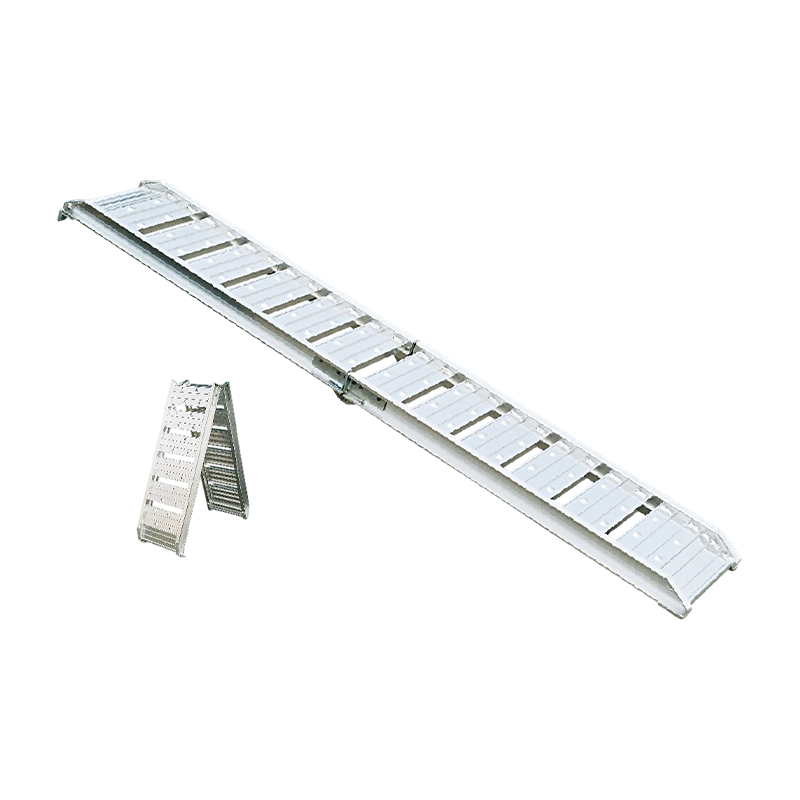
- Four Aluminum Car Ramps models from 200 kg to 320 kg rated capacity
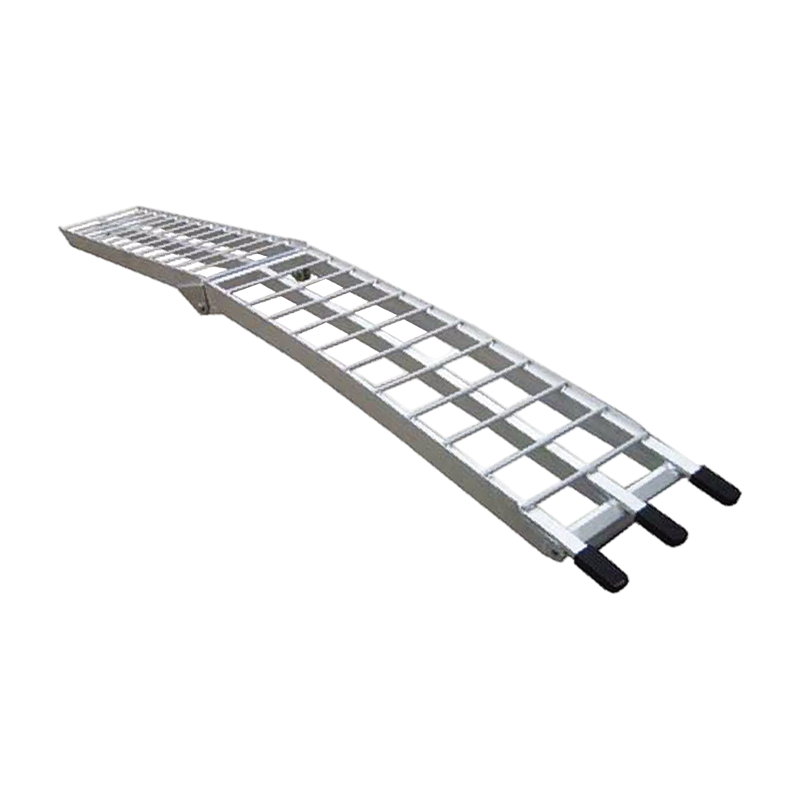
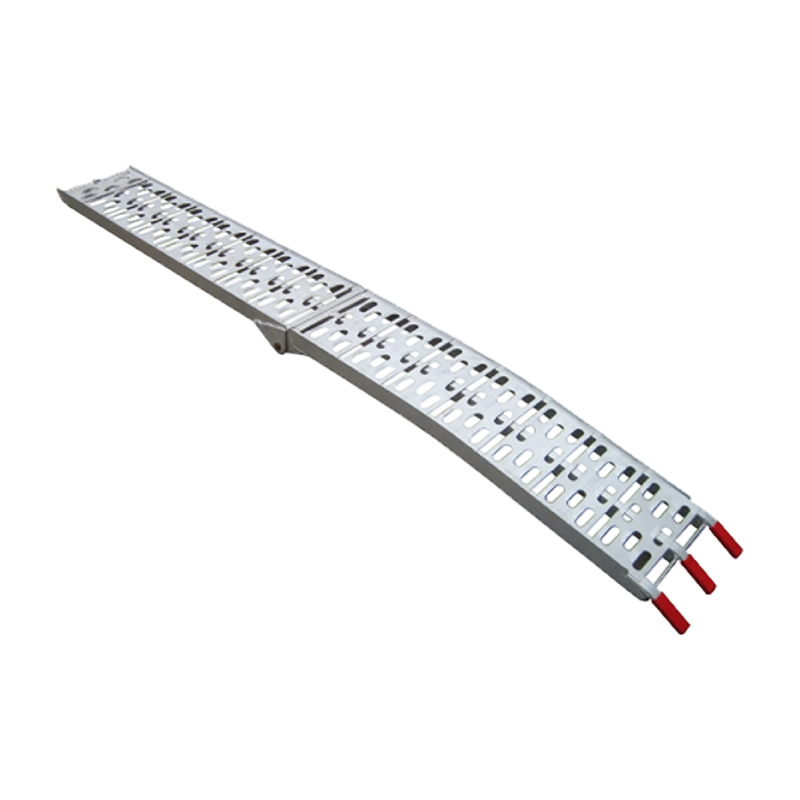
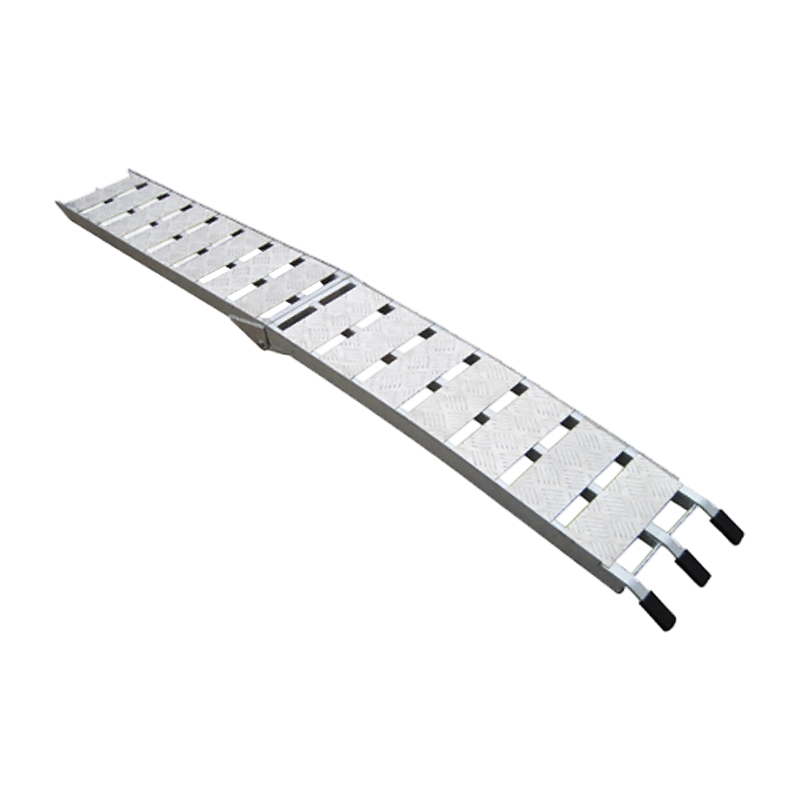
- Foldable, standard and heavy-duty formats with punched-hole or ribbed anti-slip decks
- Reinforced side rails, rust-resistant aluminum construction, portable handling weight
- OEM and ODM: logo marking, color box, carton and multi-language manuals
- ISO 9001 quality system; CE certification on core hydraulic products
Our Aluminum Loading Ramp Range
Each ramp is built around a defined working point: the load, the wheel type, the bed height of the vehicle or trailer and the storage space available between jobs. The four models below cover the majority of requests we receive from distributors and end users, and they share the same deck construction logic — a load-bearing aluminum deck, a traction surface and reinforced side rails that keep wheels tracking straight during the climb.
| Model | Rated capacity | Deck surface | Format | Typical loading task |
|---|---|---|---|---|
| OY4001 / OY4001A | 200 kg | Punched-hole anti-slip | Foldable | Light vehicles, garden and workshop equipment, van and pickup loading |
| OY4002 | 300 kg | Standard anti-slip | Standard | Cars and light trailers, routine workshop loading |
| OY4003 | 320 kg | Heavy-duty anti-slip | Heavy-duty | Heavier vehicles and wheeled machinery |
| OY4003-1 | 320 kg | Ribbed surface | Heavy-duty | Wet, oily or loose-surface conditions where traction matters |
Lengths and widths are configured per order rather than fixed to a single stock size, so a distributor can carry one capacity class in two or three regional variants without changing the underlying structure. The full ramp family, including the aluminum ramp line, sits inside our broader Aluminum Loading Ramps Manufacturers program.
Where Aluminum Loading Ramps Fit
Ramp selection is driven by what has to travel up the deck and how often. The same 320 kg heavy-duty platform that suits a service van in daily use also suits a plant room where a wheeled compressor is moved twice a year — the difference is in the deck surface, the side rail height and the top-end attachment.
- Trucks and trailers: vehicle and equipment loading where the ramp must sit on a tailgate lip, hook or pin and stay located during the climb.
- Workshops and service bays: moving cars, quads and wheeled tooling in and out of bays without a fixed dock.
- Warehouses and plant rooms: loading wheeled machinery, trolleys and crated equipment onto flatbeds.
- Mobile service and recovery: foldable ramps that stow in the vehicle and deploy at the roadside.
Where a load is moved on castors rather than wheels, a wheel dolly is often specified alongside the ramp so the load can be rolled to the ramp foot and up the deck in one movement.
Materials and Structural Design
Aluminum is specified for the deck because it keeps the ramp light enough for one-person handling while resisting corrosion in outdoor and wash-bay use. The structural work is concentrated where the load actually transfers: the deck-to-side-rail joint, the hinge on foldable models and the top-end contact point.
- Deck: high-strength, rust-resistant aluminum with a punched-hole or ribbed traction surface for wet and dry conditions.
- Side rails: reinforced rails that prevent wheel slippage and add bending stiffness along the run.
- Foldable format: a hinged joint on the 200 kg model for storage inside a van or service vehicle.
- Finish: mill or coated aluminum, with color options handled through the OEM/ODM route.
Critical Specifications We Confirm Before Production
A ramp that is 100 mm too short changes the approach angle and the way a wheel meets the deck edge. These are the points we settle with the customer before a drawing is released:
- Rated capacity per ramp and whether the load is carried on one ramp or a pair.
- Deck length and width, and the resulting approach angle against the loading height.
- Traction surface type — punched-hole or ribbed — matched to the operating environment.
- Side rail height and profile relative to wheel diameter and wheel material.
- Top-end attachment: resting lip, hook, pin or tailgate interface.
- Folded dimensions and unit weight where storage or one-person handling is a constraint.
Configuration Options and Customization
Our R&D team adjusts pressure ratings, dimensions, appearance and operating structure to suit the standards and working habits of different regions. For ramp orders this means the capacity class, deck pattern, length and attachment detail can all be set to a distributor's own specification rather than taken from a fixed catalogue.
- Branding: laser marking of the customer logo directly on the product.
- Packaging: custom color box, carton and printed artwork.
- Documentation: user manuals in English, Japanese, Spanish, French and other languages.
- Structure and parameters: size, appearance and operating detail optimized for a target market.
- Exclusive development: prototype design, sample production, mass production and testing for own-brand ramp programs.
Quality Control and Acceptance
Our factory runs a full-chain system from raw material machining to finished product shipment, supported by automated assembly lines and standardized testing procedures. The plant holds ISO 9001 quality system certification, and CE certification covers the core hydraulic products in our range. Ramp production follows the same documented inspection route, with 100% full inspection through production to keep defective goods out of the shipment.
For project orders we agree the acceptance points in advance — capacity marking, deck surface condition, rail straightness, hinge operation on foldable models and packing integrity — so that incoming inspection at the destination matches what was checked at the factory. Ramp orders are frequently consolidated with tyre changer and lifting equipment for the same workshop customer base.
Information We Use to Configure Your Solution
Our proposal is based on the working point, the material and the production target. The more precisely these inputs are defined, the faster we can return a configuration and quotation.
| Project input | What we need from you | How we use it |
|---|---|---|
| Load and wheel type | Maximum load per ramp, wheel diameter, wheel material | Sets deck width, rail height and surface pattern |
| Loading height | Bed or platform height, available run length | Sets ramp length and approach angle |
| Equipment mix | Vehicles, machines or units the ramp must serve | Determines a single model or a mixed order |
| Storage and handling | Folding requirement, storage space, number of operators | Selects foldable or fixed format and weight target |
| Attachment interface | Tailgate, hook, pin or resting lip | Defines the top-end connection detail |
| Finish and branding | Color, logo position, packaging artwork, manual language | Drives OEM/ODM configuration and print work |
| Order profile | Trial quantity, container plan, repeat schedule | Sets MOQ, packing and shipment planning |
Packaging, Documentation and After-Sales Support
Ramps are packed for container and LCL shipment with the deck protected against edge damage, and cartons can carry the customer's own artwork. Every order ships with the agreed manual language, and we keep long-term spare parts supply available so a distributor can support the product through its working life without holding large stock.
- Operation video tutorials and technical guidance for end users and service staff.
- Low-cost spare parts supply for maintenance and repair.
- Flexible MOQ with trial orders for market testing, scaling to bulk as the market develops.
- Multilingual sales and engineering support for parameter matching and quotation.
Ramps are also ordered alongside our shop crane range by distributors building a complete vehicle-handling and workshop lifting offer.
Frequently Asked Questions
What capacities do your aluminum loading ramps cover?
Four models: OY4001 and OY4001A at 200 kg in a foldable format, OY4002 at 300 kg as the standard ramp, and OY4003 and OY4003-1 at 320 kg in heavy-duty format, the latter with a ribbed deck surface.
What deck surfaces are available?
Punched-hole anti-slip decking and ribbed texture decking. Both are combined with reinforced side rails that keep wheels tracking and add stiffness along the ramp run.
Can ramps be produced under our own brand?
Yes. We laser mark customer logos on the product and produce custom color boxes, cartons and multi-language manuals. Deck length, width, surface pattern and attachment detail can also be adjusted to your market specification.
Which certifications apply to ramp orders?
Our factory operates under ISO 9001 quality system certification, and CE certification covers the core hydraulic products in our range. Ramp production runs through the same documented inspection route, with 100% full inspection during production.
What is the minimum order quantity?
MOQ is flexible on standard models. We accept small trial orders for market testing and scale to bulk, full-container cooperation as your sales develop.
What do you need to prepare a ramp quotation?
Send the maximum load per ramp, wheel diameter and material, loading height, the vehicles or equipment the ramp must serve, storage constraints, attachment interface, branding and packaging requirements, and your target order quantity. We return a configured model, packing plan and quotation.
