English
 русский
 Français
 Español
 عربى
OY6001N 1000LB Quick Setup Hydraulic Motorcycle Lift
The OY6001N 1000LB Quick Setup Hydraulic Motorcycle Lift is designed for motorcycle repair, maintenance, ...



Home · News · Industry News · Hydraulic Motorcycle Lift: Uses, Types, and Buying Guide
Content
A hydraulic motorcycle lift raises a motorcycle to a more accessible working height using hydraulic pressure, making maintenance, inspection, cleaning, and repair more convenient. It is widely used in motorcycle repair shops, dealerships, service centers, and home garages where stable lifting equipment is needed.
Unlike a basic motorcycle stand that provides a fixed support position, a hydraulic lift allows the operator to raise or lower the motorcycle with a controlled mechanism. Depending on the design, the lift may use a foot-operated hydraulic pump, a hand-operated pump, or a powered hydraulic system.
For example, lifting a motorcycle to a suitable working height can make oil changes, brake inspections, wheel servicing, and chain maintenance easier to perform. The exact working height and lifting capacity depend on the model selected.
A hydraulic motorcycle lift operates through hydraulic pressure generated by a pump. The pump moves hydraulic fluid into a cylinder, creating force that extends the lifting mechanism. This force raises the platform or lifting arm and the motorcycle supported on it.
The operator positions the motorcycle on the lift, confirms that the wheels or designated support points are correctly aligned, and secures the motorcycle according to the equipment instructions. The hydraulic mechanism then raises the platform gradually. Before maintenance begins, the operator must engage the specified mechanical safety locks and verify that the motorcycle is stable.
When the work is complete, the operator removes tools and obstructions, confirms that the surrounding area is clear, and follows the manufacturer's procedure to release the safety locks and lower the platform in a controlled manner.
Hydraulic motorcycle lifts are available in different configurations to accommodate motorcycles of various sizes and workshop requirements. Understanding the main types helps buyers select equipment that matches their maintenance tasks and available space.
| Lift Type | Main Features | Typical Applications |
|---|---|---|
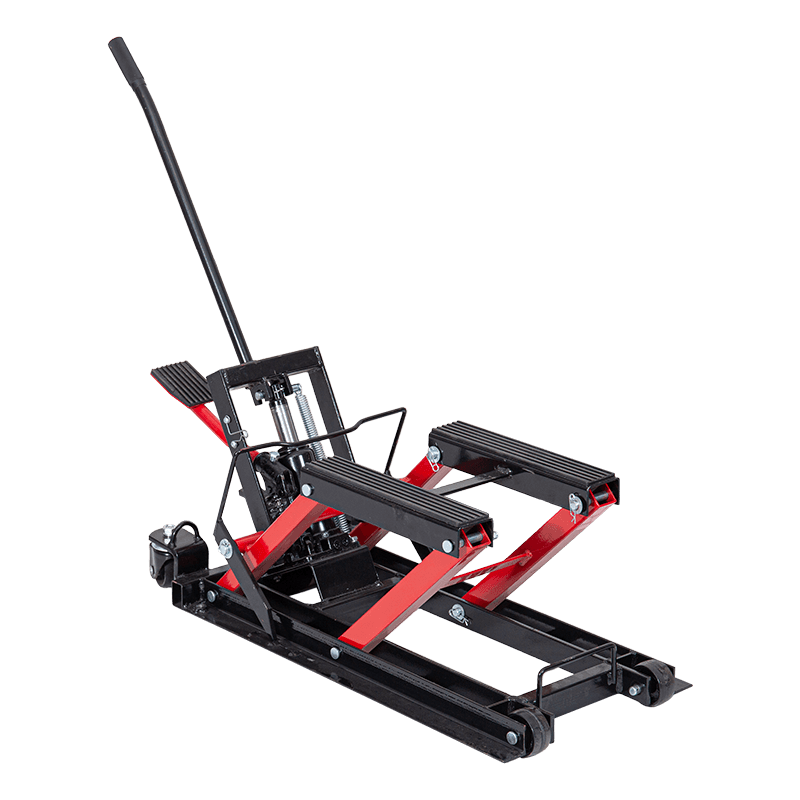
| Hydraulic scissor lift | Uses a scissor-shaped mechanism to raise a platform vertically. | General motorcycle servicing and workshop maintenance. |
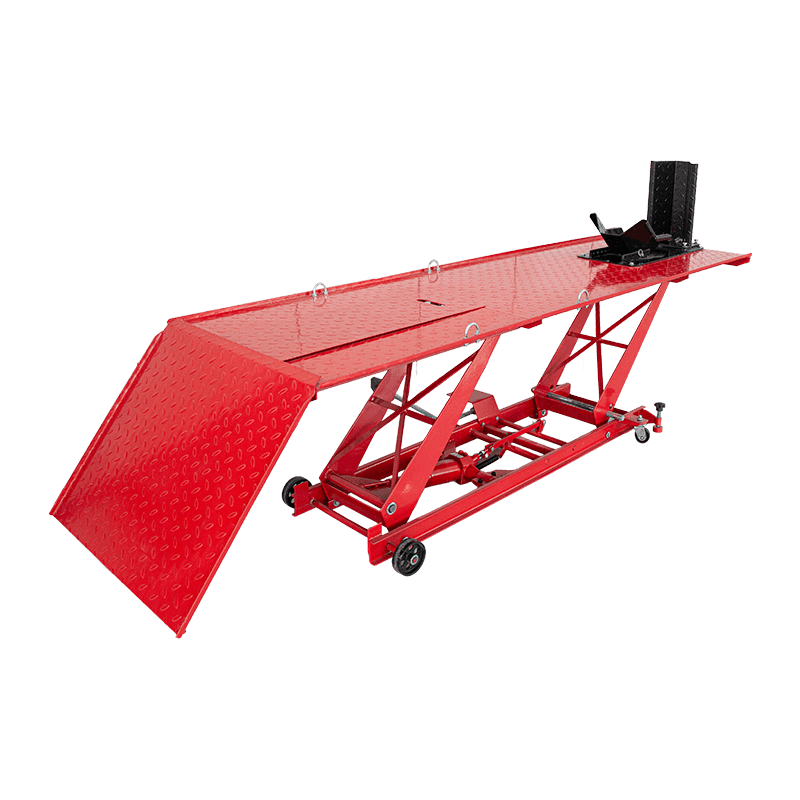
| Hydraulic table lift | Features a broad platform for supporting the motorcycle. | Repair shops handling routine servicing and component replacement. |
| Portable hydraulic motorcycle lift | Compact construction intended for easier positioning and storage. | Home garages, mobile maintenance, and limited workspaces. |
| Electric-hydraulic motorcycle lift | Uses an electric motor to power the hydraulic pump. | Professional workshops with frequent lifting requirements. |
These designs are not mutually exclusive. For example, a scissor-style lift may be portable or electrically powered. Buyers should compare the complete specifications rather than relying on the product name alone.
Working on a motorcycle close to floor level can require prolonged bending, kneeling, or reaching. A hydraulic motorcycle lift raises the machine to a more suitable height, helping technicians access components with greater convenience. The adjustable height is particularly useful when different tasks require different working positions.
A suitable lifting platform can provide easier access to the wheels, suspension, underside, and other service areas. In a busy repair shop, this can streamline recurring tasks such as inspections, cleaning, tire work, and scheduled maintenance.
A hydraulic system allows the operator to raise the motorcycle progressively rather than lifting it manually. A properly designed platform, appropriate restraints, and correctly engaged safety locks can help maintain stability during servicing.
Depending on the platform dimensions, rated capacity, and support arrangement, a hydraulic motorcycle lift may accommodate scooters, standard motorcycles, touring bikes, and other compatible models. Heavier or unusually shaped motorcycles may require specialized equipment and additional stabilization.
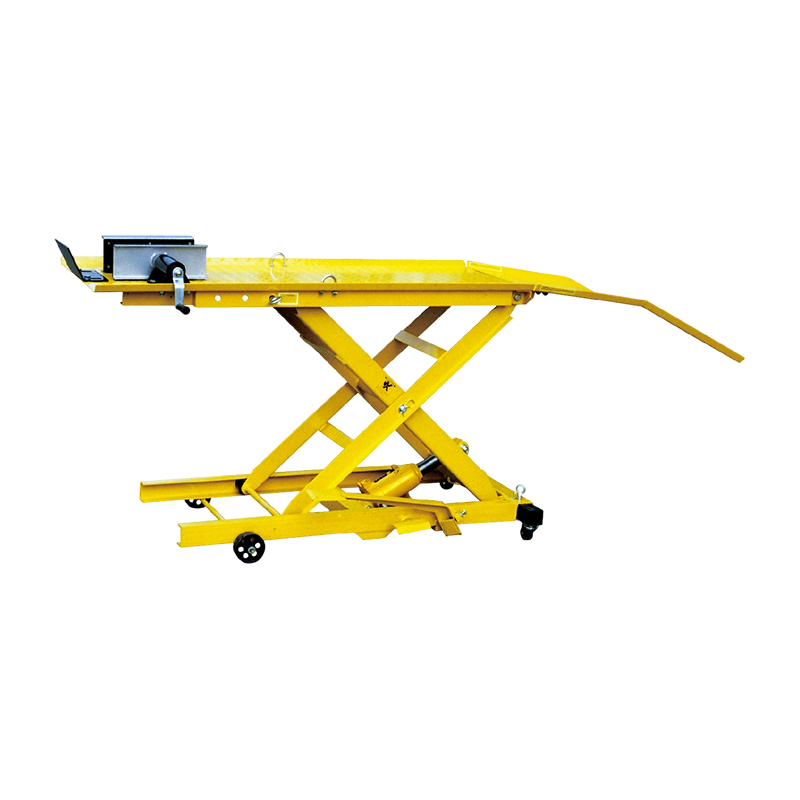
The right hydraulic motorcycle lift should match the motorcycle's weight, dimensions, maintenance requirements, and the available workspace. Comparing these factors before purchasing helps avoid capacity limitations and compatibility problems.
Check the manufacturer's rated lifting capacity and compare it with the motorcycle's actual operating weight, including any accessories or equipment that will remain on the motorcycle during lifting. For example, if a motorcycle weighs 280 kg, a lift rated for 250 kg is unsuitable. A lift rated for 350 kg may be a candidate, provided its platform, restraints, and loading conditions are also appropriate.
Never exceed the rated capacity. Also check whether the stated rating applies to the entire platform, a specific loading position, or another defined configuration.
The platform must provide sufficient space for the motorcycle's wheelbase and support points. Check the usable platform length and width, wheel clamp compatibility, tie-down locations, and any clearance restrictions. If the lift will be used for different motorcycle models, confirm compatibility with the largest and heaviest intended machine.
Compare the minimum platform height with the available loading clearance and the maximum height with the working position required. Ceiling height, overhead lighting, shelving, and suspended equipment can affect how high a motorcycle can be safely raised.
A hydraulic motorcycle lift and a motorcycle jack can both raise a motorcycle, but they differ in support structure, working area, and intended use. The most suitable option depends on the maintenance task and the motorcycle's design.
| Comparison | Hydraulic Motorcycle Lift | Motorcycle Jack |
|---|---|---|
| Support design | Often uses a platform or broad lifting structure. | Usually lifts at designated contact points. |
| Working access | Can provide a larger work surface and more convenient access to multiple components. | Access depends on the lifting points and jack configuration. |
| Space requirements | May require more floor space, particularly for full-length platforms. | Often more compact and easier to store. |
| Typical use | Routine servicing and more extensive workshop maintenance. | Selected wheel, tire, and suspension tasks when compatible with the motorcycle. |
Neither option is suitable for every motorcycle. A lift or jack must support the machine at approved points and provide the required stability for the intended work. Some maintenance procedures require additional stands or restraints.
Correct operation is essential because an unstable motorcycle can fall during lifting or maintenance. Always follow the instructions supplied with the lift and the motorcycle manufacturer's service guidance.
Remove tools and loose components from the platform, ensure that nobody is in the lowering area, and release the safety locks only as directed by the manufacturer. Lower the motorcycle slowly and verify that it is stable on the ground before removing restraints or moving the lift.
Routine inspection helps maintain the performance and reliability of a hydraulic motorcycle lift. Maintenance frequency depends on the lift design, usage intensity, and manufacturer recommendations.
If the lift leaks fluid, lowers unexpectedly, makes unusual noises, or fails to maintain its position, stop using it and have the fault assessed. Never inspect or repair a pressurized hydraulic system without following the proper isolation and maintenance procedures.
A hydraulic motorcycle lift is a practical solution for raising motorcycles to a more accessible working height, improving access for maintenance and helping workshops organize repair tasks efficiently. Its value depends on choosing the right lifting capacity, platform dimensions, operating system, and safety features for the intended motorcycle and working environment.
For professional service centers, a robust lift with suitable capacity and reliable locking mechanisms can support frequent maintenance work. For home garages, a compact model may be more appropriate when floor space and storage are limited. In every setting, correct installation, secure motorcycle positioning, regular inspection, and proper use of mechanical safety locks are essential for safe operation.